Revise Theme 2 with interactive flashcards written to the Edexcel A
(9EC0) specification. Flip each card to check yourself, rate how
well you knew it, and the deck will bring back the cards you found
hard — a study technique with strong evidence behind it. Every card
is cross-checked against our full revision notes, and each one links
to the page that teaches it in depth.
106 cards · 24 topics · Edexcel A Theme 2: The UK
Economy - Performance and Policies
Sample cards
Define GDP, and distinguish actual from
potential growth.
Gross Domestic Product — the total monetary
value of all final goods and services produced within a
country's borders in a given year: the primary measure of
economic activity.
Actual growth is a rise in real GDP —
producing more than last year.
Potential growth is a rise in productive
capacity — what the economy could produce at full
employment.
State the expenditure approach to measuring GDP.
GDP=C+I+G+(X−M)
Consumption + Investment + Government spending + Net exports. The income approach — summing wages, rent, interest and profit — must reach the same total, because every pound spent is a pound of income for someone.
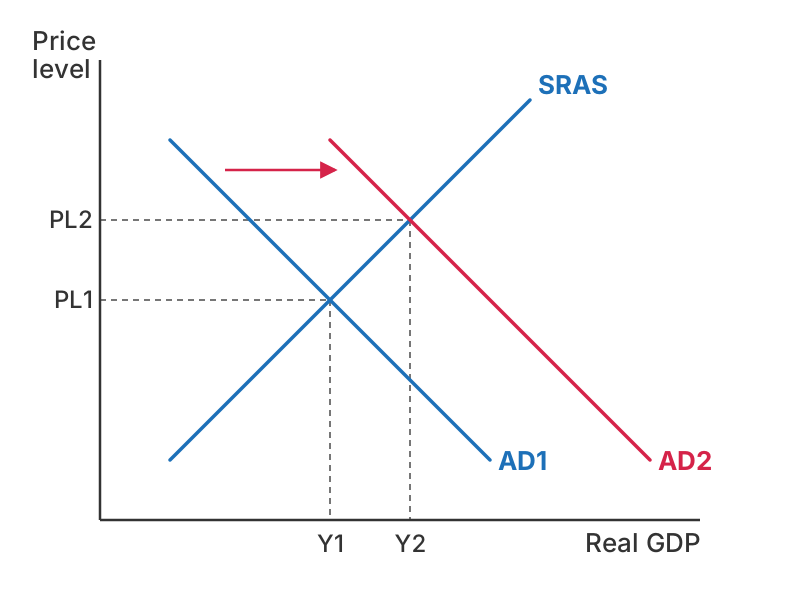
Show demand-pull inflation on an AD/AS
diagram.
Aggregate demand shifts right (AD1 to AD2) — from rising
consumer spending, investment, government spending or net
exports — while SRAS is unchanged. The equilibrium moves up
the SRAS curve: the price level rises from PL1 to PL2 as
output rises from Y1 to Y2.
Prices are pulled up by excess demand,
which is why demand-pull inflation strengthens as the
economy nears full capacity.
These three are a taste of the deck. The full 106-card deck
loads right here — flip, rate and shuffle the cards, with your
progress saved on this device.