Aggregate Supply
Short-Run Aggregate Supply (SRAS)
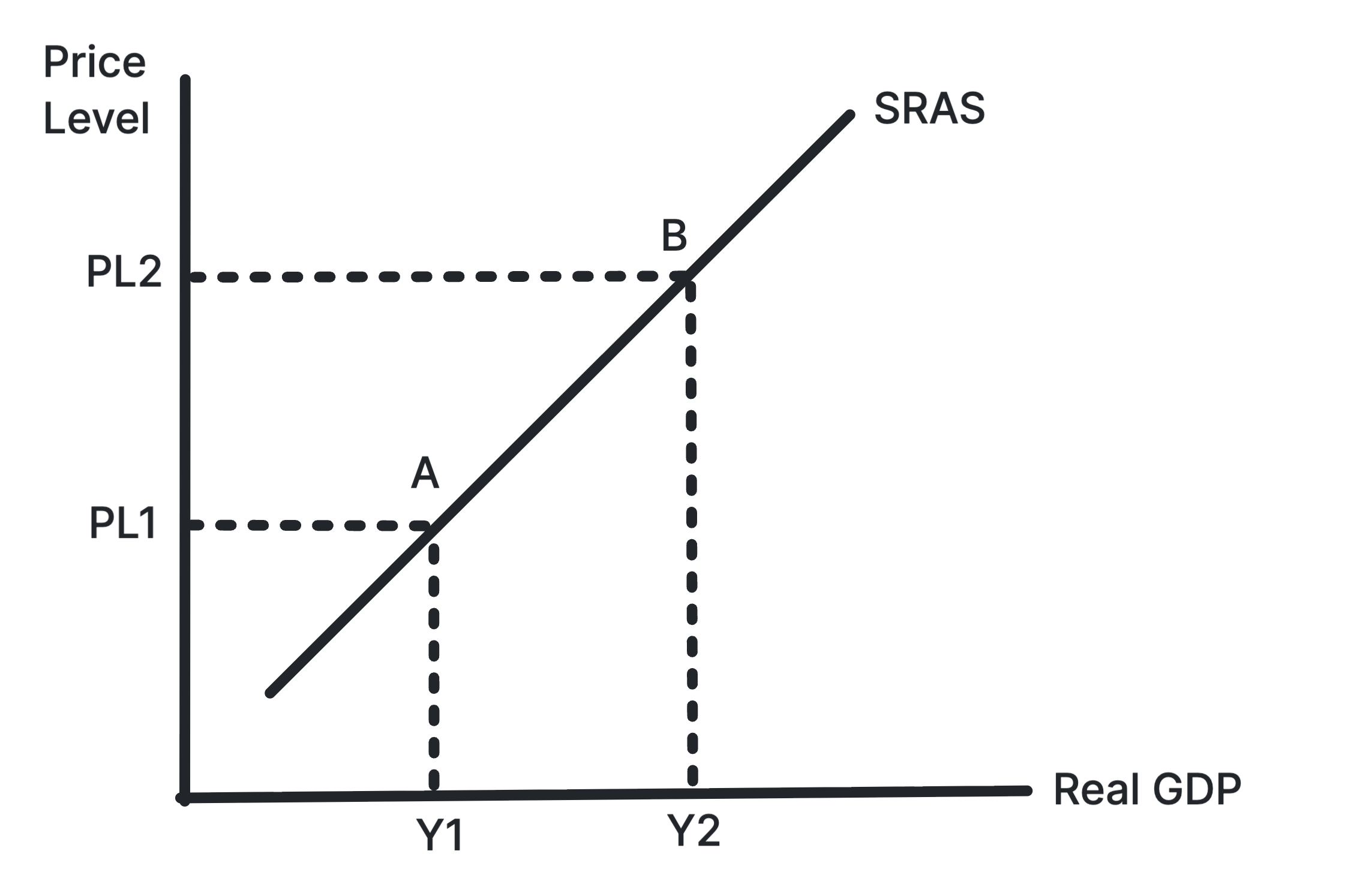
Definition: Short-run aggregate supply is the total planned output of goods and services in an economy at a given price level in a period where at least one factor of production is fixed, such as the capital stock or technology.
The SRAS Curve
Why the SRAS Curve Slopes Upward
In the short run, as output increases, firms face rising unit costs, such as paying overtime wages or using less efficient machinery.
To maintain profitability, firms need to charge higher prices for this extra output.
Movements vs. Shifts of the SRAS Curve
A Movement Along the SRAS Curve
- Cause: A change in the average price level, holding other things constant.
- This shows firms changing their level of output in response to a change in price level.
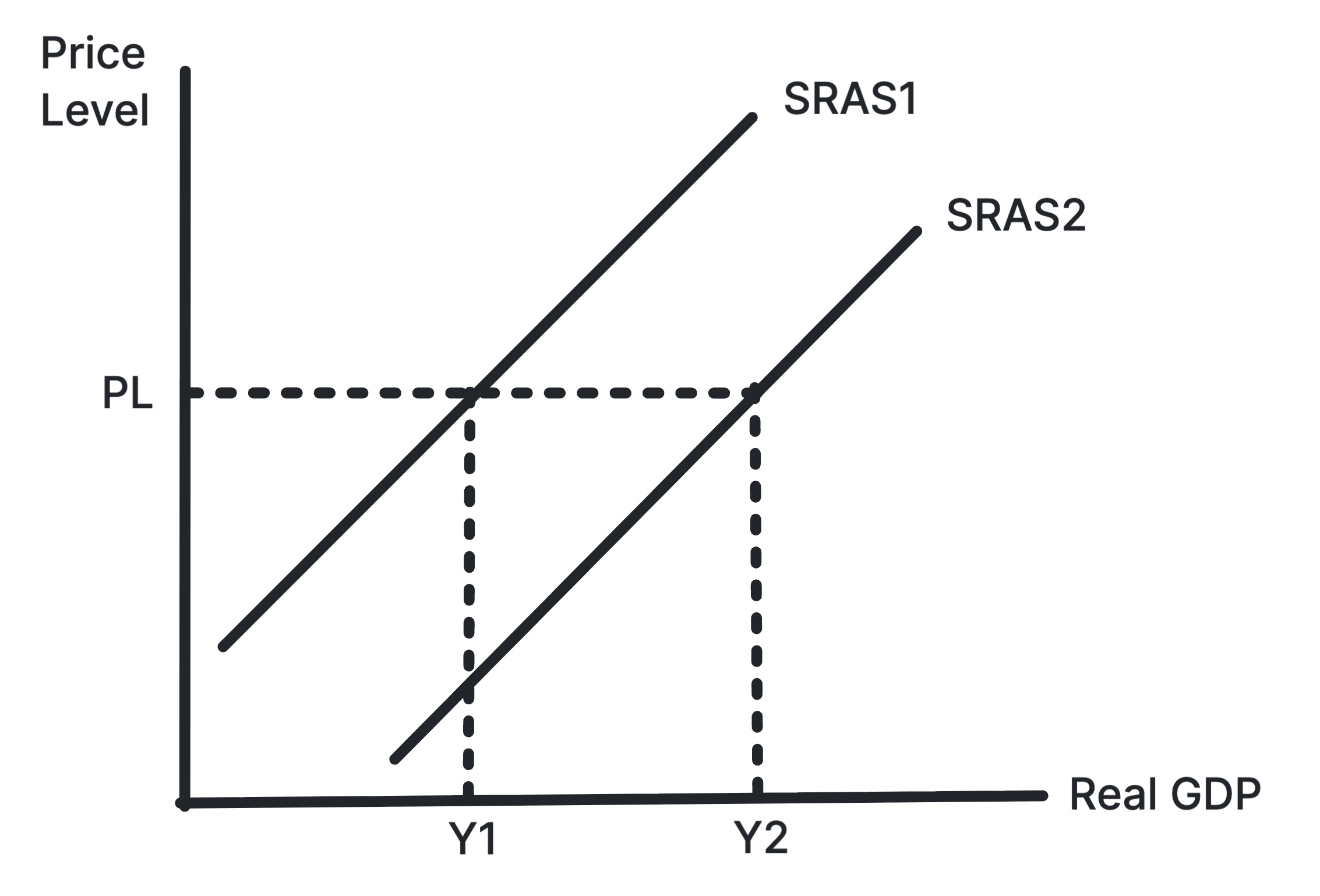
A Shift of the Entire SRAS Curve
- Cause: A change in any condition of SRAS, meaning a change in production costs for firms across the economy.
- This changes the level of output firms are willing to supply at every given price level.
- These conditions are covered in 2.3.2 Short-Run Aggregate Supply.
Long-Run Aggregate Supply (LRAS)
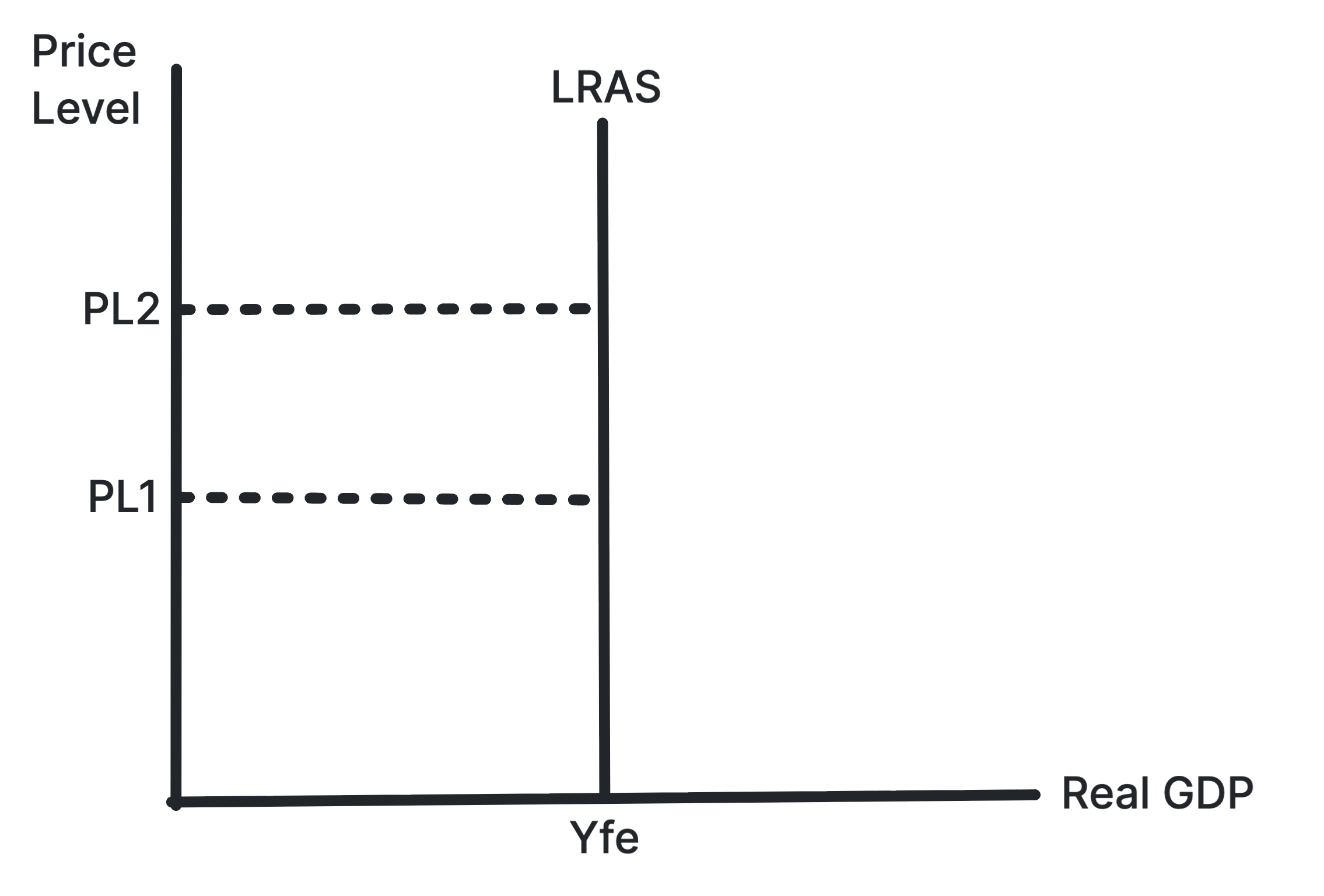
Definition: Long-run aggregate supply is the total potential output of an economy when all factors of production are fully and efficiently employed.
It represents the economy's productive capacity.
Key Idea: The LRAS curve is independent of the price level. It depends on the quantity and quality of the factors of production, such as labour, capital, resources, technology, and entrepreneurship.
The Relationship Between SRAS and LRAS
- SRAS shows what firms will produce at different price levels in the short run.
- LRAS shows what the economy can produce at maximum potential.
- Long-run economic growth is shown by an outward shift of the LRAS curve, meaning an increase in productive capacity.
- In the long run, the economy tends towards the LRAS level of output, while SRAS shocks are temporary adjustments around that trend.
Stuck on this topic? Work through it with an online A-Level Economics tutor in a free 15-minute intro call, or send an essay on it for A-Level Economics essay marking.