Output Gaps
Actual Growth vs. Trend Rate Growth
Actual Growth: The actual growth rate of an economy is the percentage change in real GDP over a period of time, usually a year.
Trend Rate Growth: The trend rate of growth is the long-term average growth rate of an economy, which is usually measured over a period of 10 years or more.
Relationship: If actual growth is above the trend rate, the economy is growing faster than its long-term average, which may lead to inflationary pressures. If actual growth is below the trend rate, the economy is growing slower than its long-term average, which may lead to unemployment and deflationary pressures.
What Is an Output Gap?
Definition: An output gap is the difference between the actual level of real GDP and the potential level of real GDP, which is the level of output produced when the economy is at full capacity.
\[ \text{Output Gap} = \text{Y} - \text{Yfe} \]
Negative Output Gap
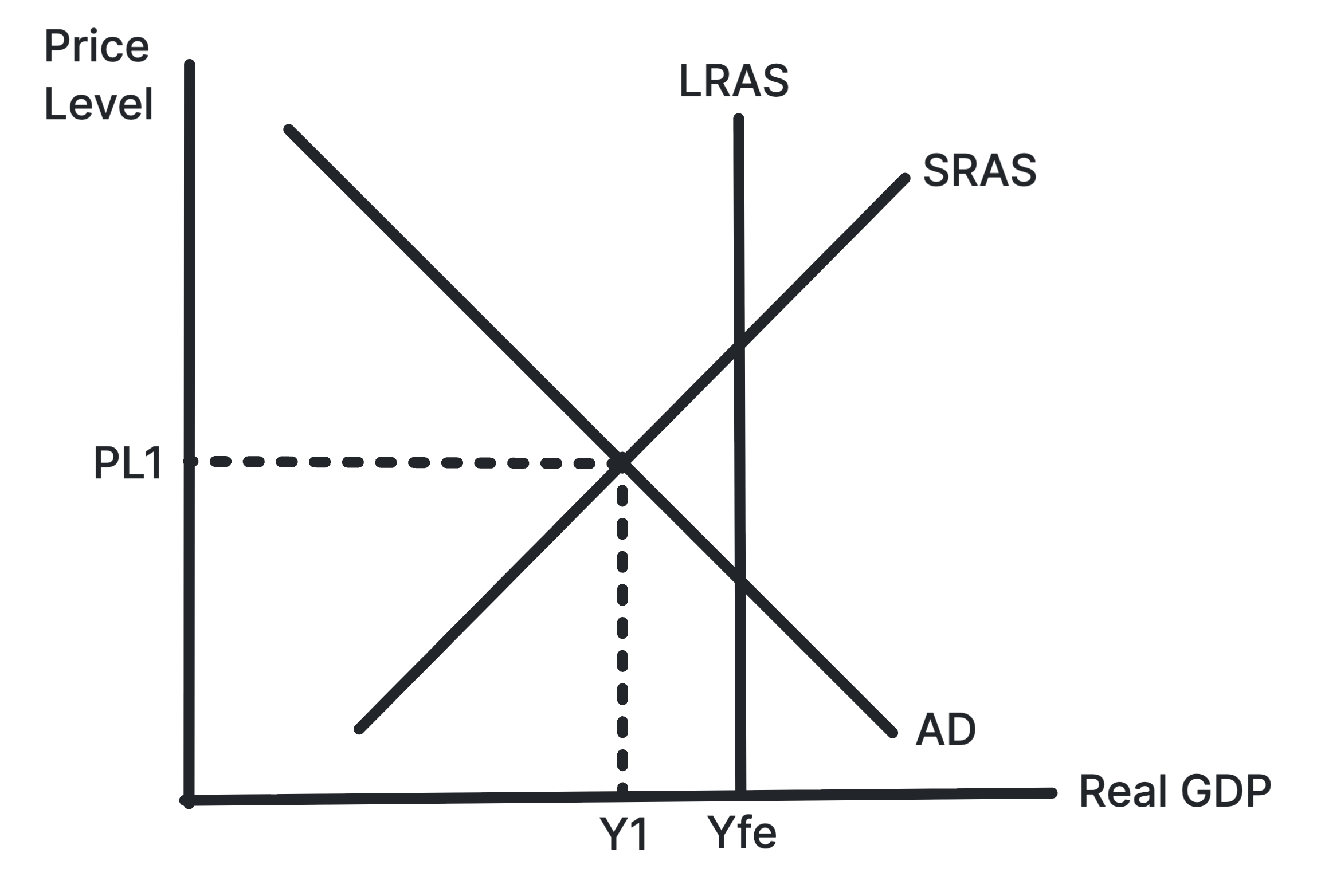
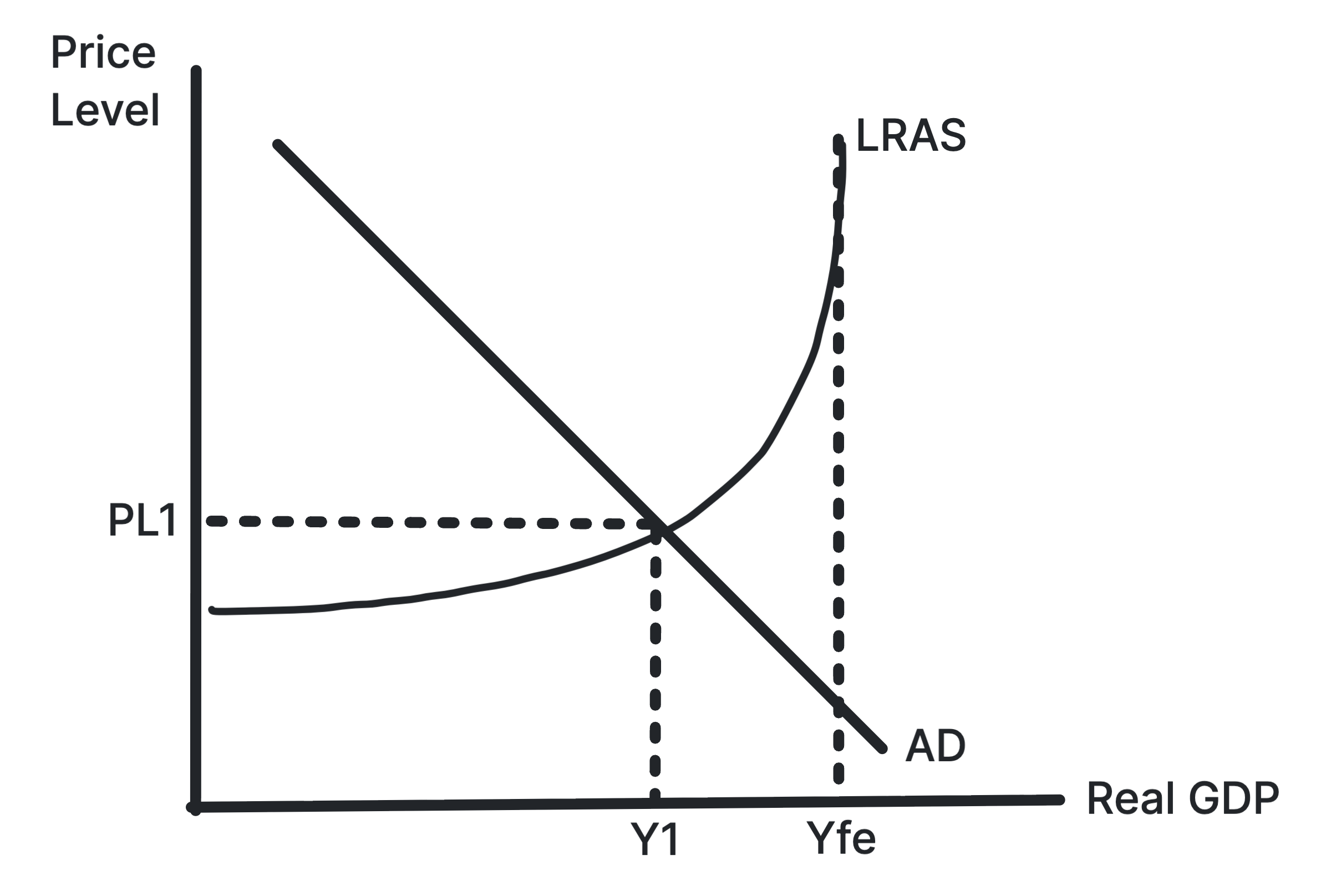
A negative output gap, also called a recessionary gap, occurs when actual GDP is less than potential GDP.
Characteristics: Spare capacity, unemployment of resources, especially cyclical unemployment, and weak inflationary pressure or even deflationary pressure.
Cause: This is typically caused by a deficiency of aggregate demand.
This can be shown on both a Classical and Keynesian AD/AS diagram, where the economy is producing at a level of output below the full employment level of output (Yfe).
Positive Output Gap
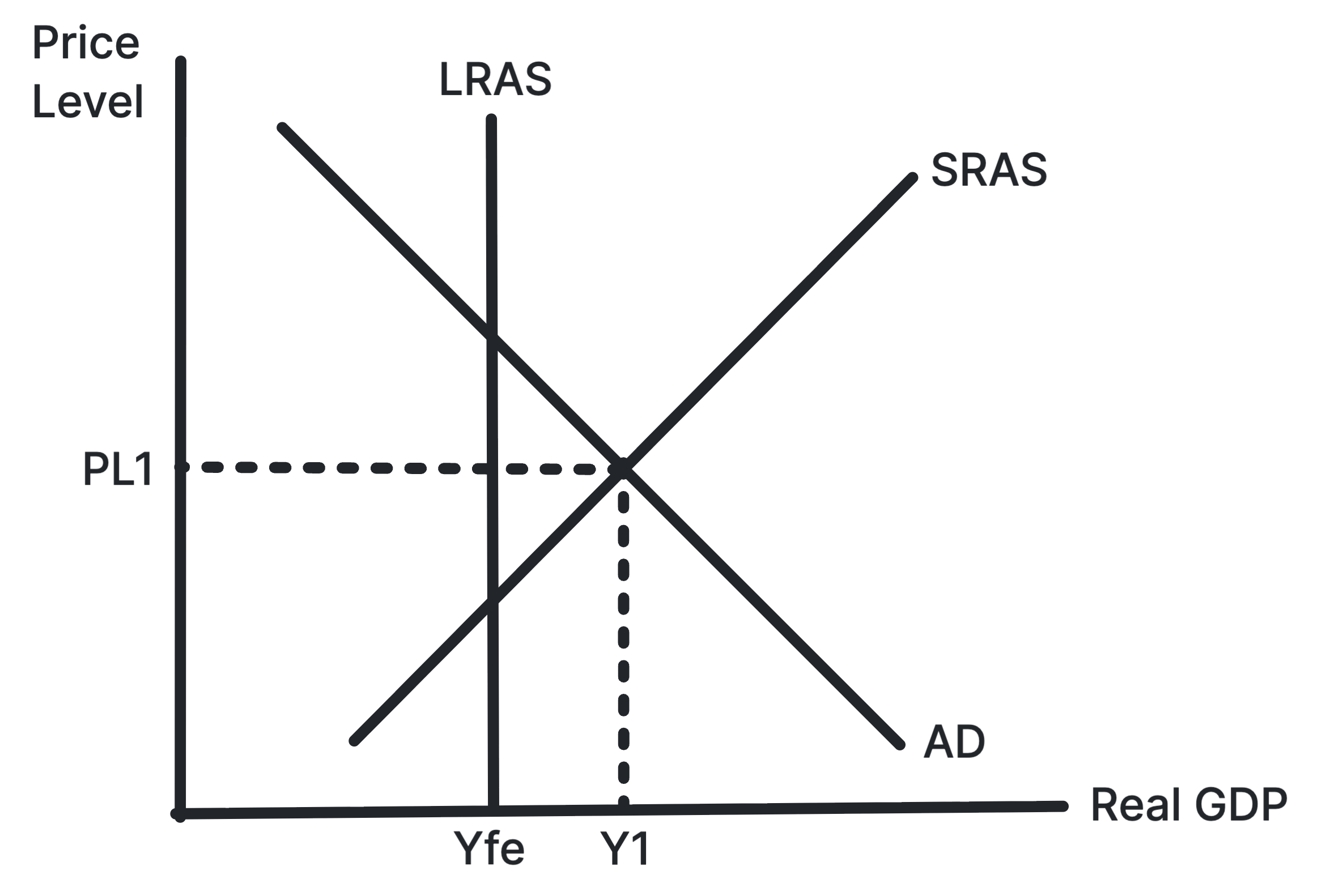
A positive output gap, also called an inflationary gap, occurs when actual GDP is greater than potential GDP.
Characteristics: Resources are used unsustainably, for example through excessive overtime or overuse of machinery, leading to demand-pull inflation, labour shortages, and possible current account problems.
Cause: This is usually caused by excessive aggregate demand.
This can only be shown on a Classical AD/AS diagram, where the economy is producing at a level of output above the full employment level of output (Yfe).
The Role of Economic Views
Classical View: Output gaps are temporary. The economy self-corrects through price and wage flexibility. A negative output gap encourages falling prices and wages, while a positive output gap creates rising costs that reduce supply.
Keynesian View: The economy can be stuck in a negative output gap because of low confidence and sticky wages and prices. Government intervention is therefore needed to raise aggregate demand and close the gap.
Difficulties in Measuring Output Gaps
Measuring the size of an output gap is difficult because potential GDP is not directly observable. Economists must rely on estimates and models, which can vary significantly. Changes in technology, labour force participation, and capital stock can also affect potential output, making it challenging to determine the exact size of the gap.
Stuck on this topic? Work through it with an online A-Level Economics tutor in a free 15-minute intro call, or send an essay on it for A-Level Economics essay marking.