Short-Run Aggregate Supply
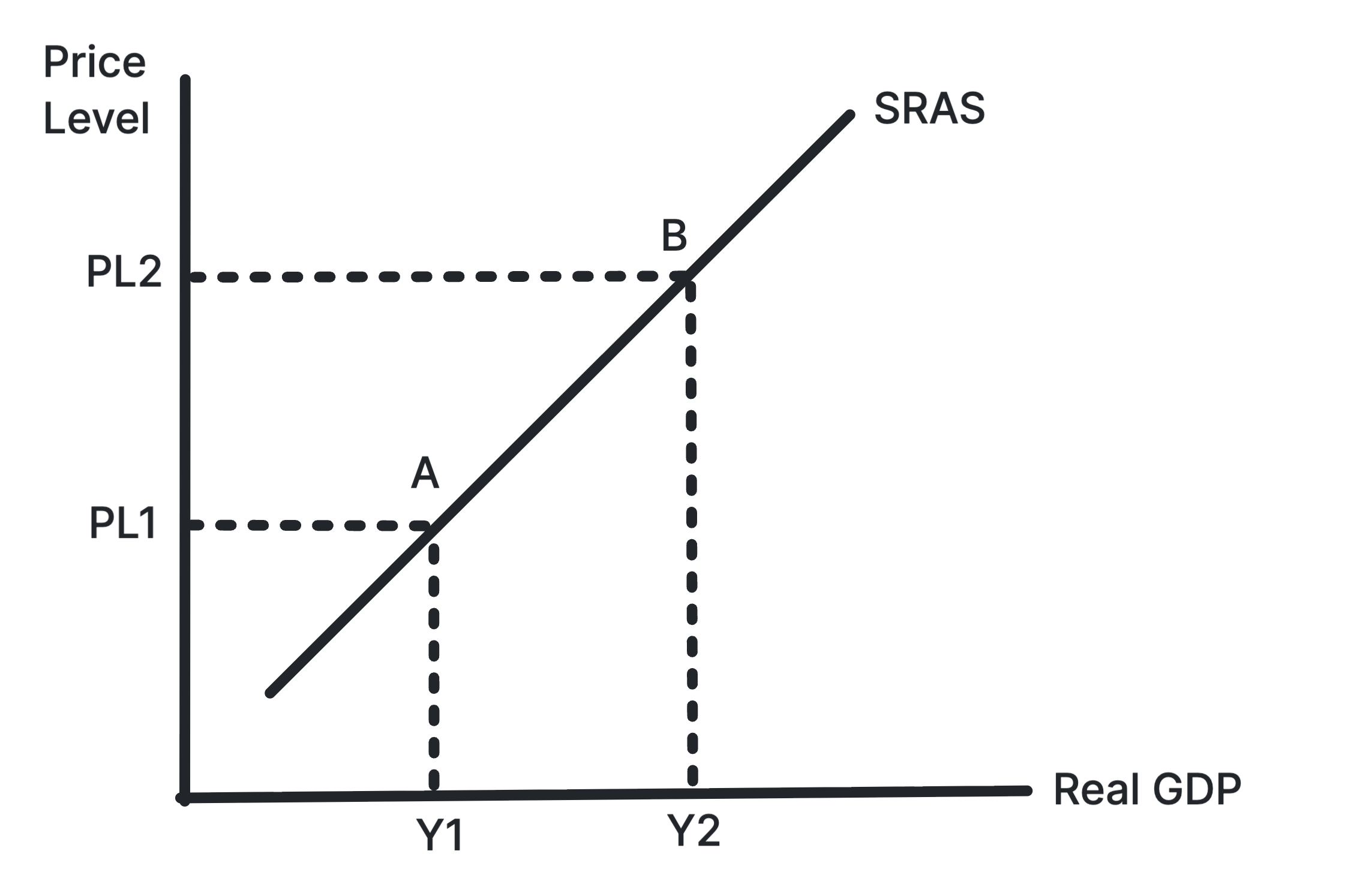
The SRAS Curve: A Recap
Definition: Short-run aggregate supply is the total planned output of goods and services in an economy at a given price level, assuming that at least one factor of production, such as capital or technology, is fixed.
The SRAS curve is upward sloping because, in the short run, higher output leads to higher unit costs, such as overtime wages. Firms therefore need a higher price to make additional production worthwhile.
Shifts in the SRAS Curve
A shift of the entire SRAS curve is caused by a change in the costs of production for firms across the economy.
This changes the level of output firms are willing to supply at every given price level.
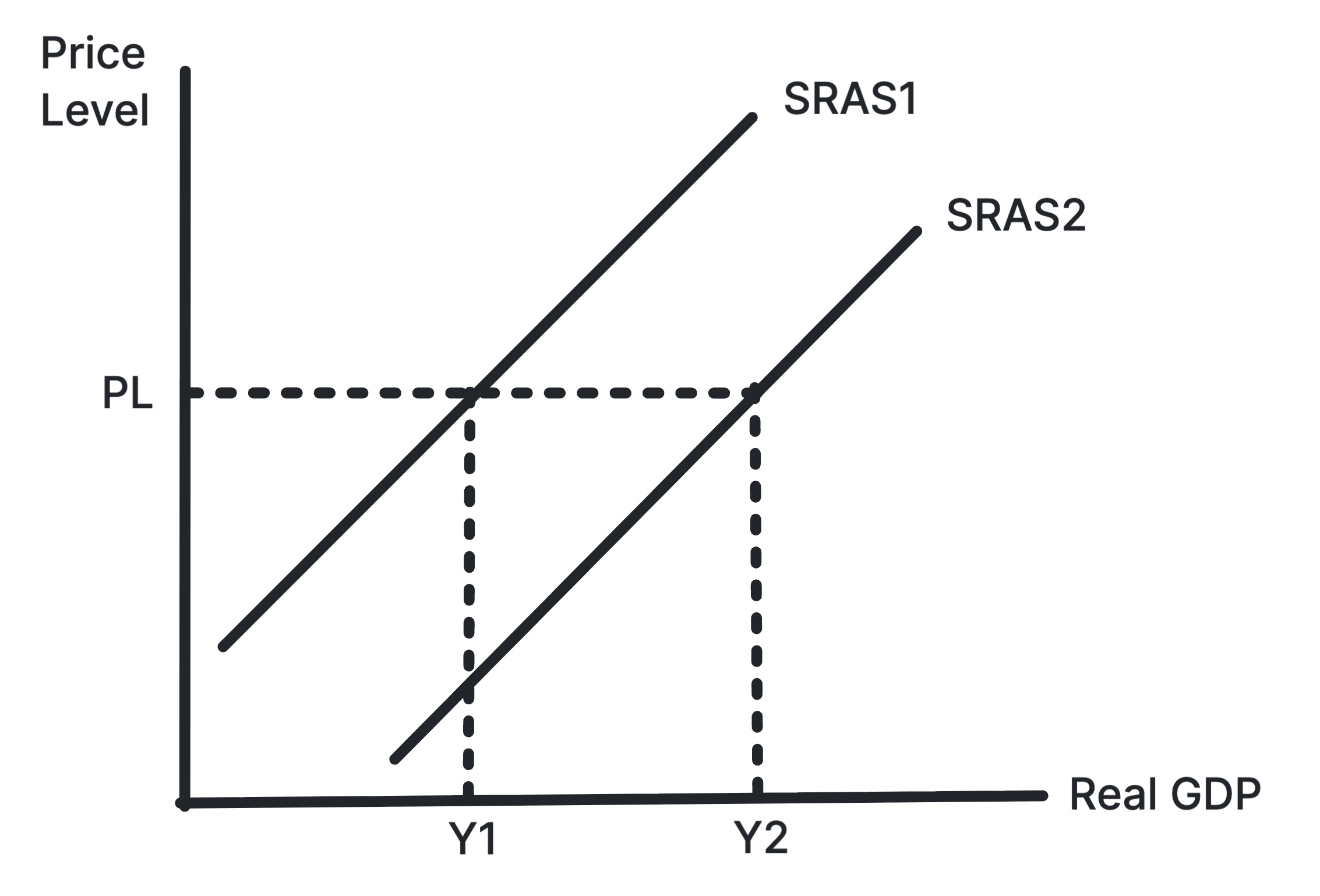
A leftward shift is the origin of cost-push inflation. When production costs rise across the economy, SRAS shifts left, and the result is a higher price level together with lower real output. A cost-push shock is a sudden version of the same thing, such as a sharp rise in oil prices.
Key Factors Influencing SRAS
| Factor | Impact on SRAS |
|---|---|
| Cost of Raw Materials or Energy | A fall in the cost of raw materials or energy reduces production costs, shifting SRAS to the right. A rise in costs shifts SRAS to the left. |
| Labour Costs | A fall in labour costs reduces production costs, shifting SRAS to the right. A rise in labour costs shifts SRAS to the left. |
| Exchange Rates | A depreciation of the domestic currency makes imported raw materials more expensive, raising production costs and shifting SRAS to the left. An appreciation has the opposite effect. |
| Indirect Taxes | An increase in indirect taxes raises production costs, shifting SRAS to the left. A decrease in indirect taxes lowers production costs, shifting SRAS to the right. |
| Subsidies | Government subsidies can lower production costs, shifting SRAS to the right. The removal of subsidies can raise costs, shifting SRAS to the left. |
| Supply Shocks | Unexpected events, such as natural disasters or sudden changes in oil prices, can affect production costs and shift SRAS. A negative supply shock shifts SRAS to the left, while a positive supply shock shifts it to the right. |
Stuck on this topic? Work through it with an online A-Level Economics tutor in a free 15-minute intro call, or send an essay on it for A-Level Economics essay marking.