Supply
Producer Objectives and Decisions
Most producers aim to make a profit, though some put survival, growth or a social purpose first (see 1.1.2 Business Objectives). Whatever the aim, a producer has to decide what to make, how much to make and what price to charge.
Those decisions depend on two things: the price the product will sell for and what it costs to make. A higher price means more profit on each unit, so producers are willing to make more. Higher costs mean less profit on each unit, so they make less.
The Supply Curve
Supply: the quantity of a good or service that producers are willing and able to sell at each price over a given period of time.
Law of supply: as the price of a good rises, the quantity supplied rises, ceteris paribus.
The supply curve slopes up from left to right because:
- a higher price makes each unit more profitable, so existing producers want to sell more
- making extra output often costs more (overtime pay, older machines brought back into use), and only a higher price covers it
- firms making other products are tempted to switch their resources into this one.
Movements Along and Shifts of the Supply Curve
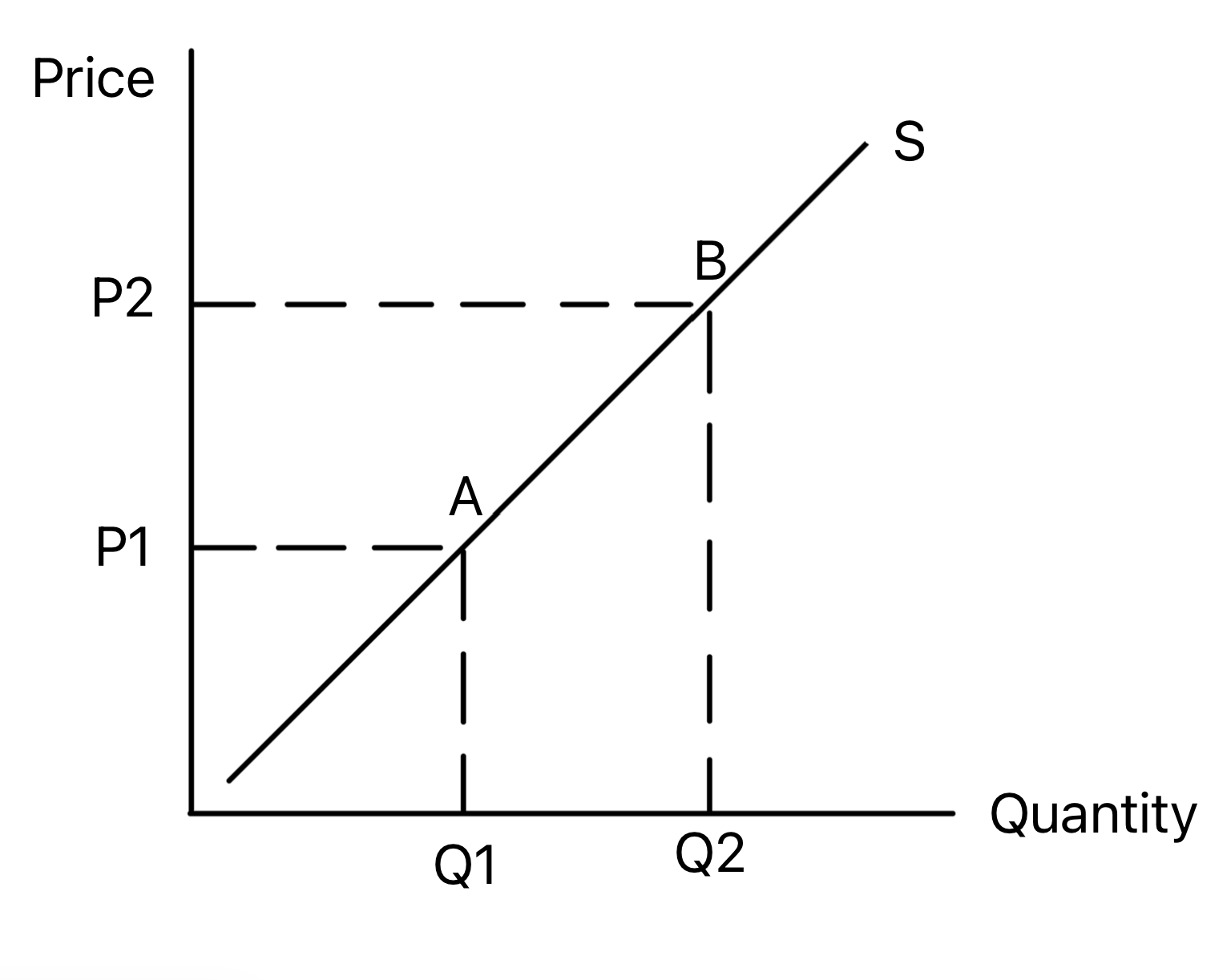
A change in the good's own price moves producers along the curve:
- Extension of supply: the price rises and quantity supplied rises (A to B in Figure 1).
- Contraction of supply: the price falls and quantity supplied falls (B to A).
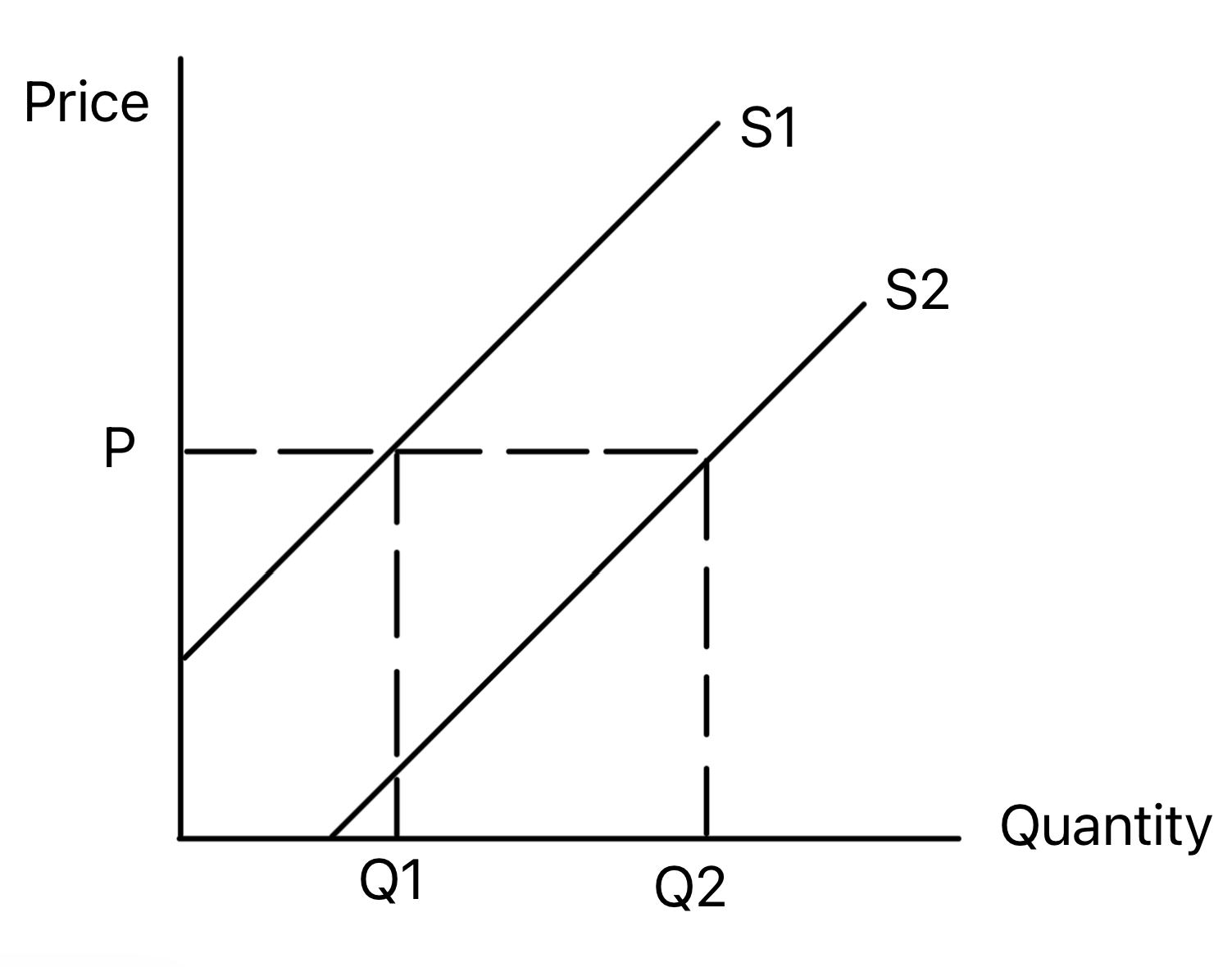
A change in any other factor shifts the curve. An increase in supply moves it right, so more is offered for sale at every price. A decrease in supply moves it left.
Factors That Shift the Supply Curve
Indirect tax: a tax on spending, such as VAT or fuel duty, which the seller pays to the government. Subsidy: a payment from the government to producers, which lowers their costs.
| Factor | What increases supply | Example |
|---|---|---|
| Costs of production | Wages, raw materials, energy or rent get cheaper | A fall in energy prices cuts costs for a glass maker |
| New technology | A new machine or method lets firms make more with the same inputs | Robots in a warehouse let it pack more orders an hour |
| Indirect taxes | The tax is cut or removed | A cut in the duty on beer lowers what brewers pay on each pint |
| Subsidies | A subsidy is introduced or increased | A grant to farmers for each hectare planted with a crop |
| Number of firms in the industry | New firms enter the market | New coffee shops open on a busy high street, so the town's supply of coffee rises |
| External shocks | An unexpected event helps production, such as a bumper harvest | Good growing weather produces a large crop of strawberries |
Each one also works the other way. Higher costs, a new or higher tax, a subsidy being withdrawn or firms leaving the industry all shift supply to the left.
External shocks are events outside the industry's control, and most of them cut supply. In 2023/24, bad weather and crop disease hit cocoa farms in Côte d'Ivoire and Ghana, and world cocoa production fell by about 13%. The supply curve for cocoa shifted left and its price soared, which raised chocolate makers' costs too.
Taxes and subsidies shift supply, not demand. An indirect tax is paid by the seller, so it adds to the cost of every unit and shifts the supply curve left. The demand curve stays where it is, even though buyers end up paying a higher price.
Stuck on this topic? Work through it with an online A-Level Economics tutor in a free 15-minute intro call, or send an essay on it for A-Level Economics essay marking.