Demand
Consumer Objectives and Decisions
Every consumer has a limited income and far more things they would like to buy than they can afford. Their objective is to get as much satisfaction as possible from the money they have. Economists call this satisfaction utility.
So each purchase has an opportunity cost: a student who spends their last £40 on jeans gives up a night out. Quality, convenience and the brand count as well as price.
Marginal utility: the extra satisfaction a consumer gets from one more unit of a good.
Marginal utility usually falls as a consumer buys more of the same thing. This is the law of diminishing marginal utility. The third coffee of the day is worth less to you than the first, so you will only buy it if it is cheap enough.
The Demand Curve
Demand: the quantity of a good or service that consumers are willing and able to buy at each price over a given period of time.
Both parts matter. Wanting a new car is not demand unless you can pay for it. Economists call demand that is backed by the ability to pay effective demand.
Law of demand: as the price of a good rises, the quantity demanded falls, ceteris paribus (all other things staying the same).
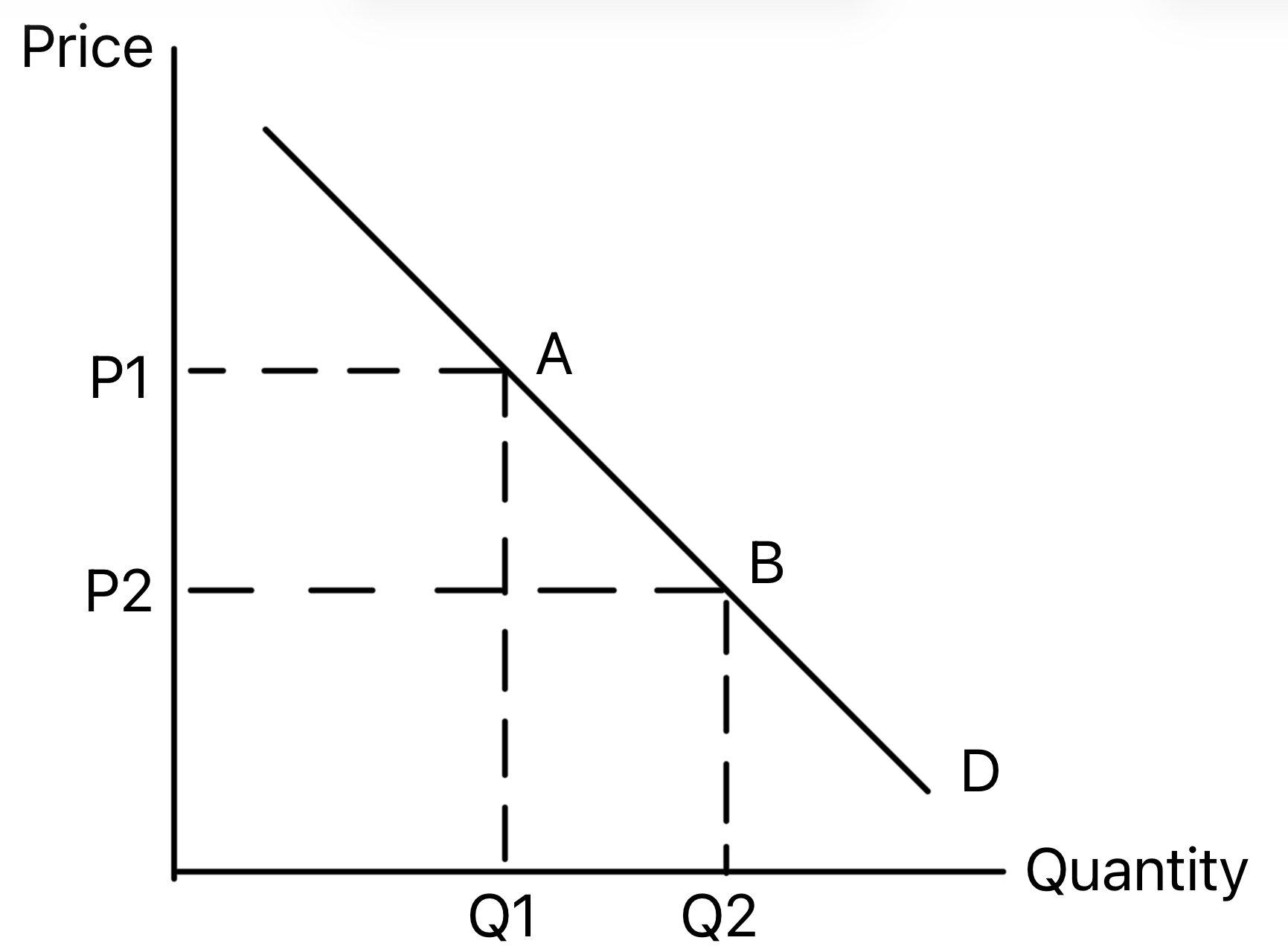
That is why the demand curve slopes down from left to right. When the price falls, buyers who could not afford it before can now, existing buyers tend to buy more, and the good looks cheaper next to its alternatives.
Movements Along and Shifts of the Demand Curve
A change in the good's own price moves consumers along the existing curve:
- Extension of demand: the price falls and quantity demanded rises, a move down the curve (A to B in Figure 1).
- Contraction of demand: the price rises and quantity demanded falls, a move up the curve (B to A).
A change in anything else that affects demand shifts the whole curve. An increase in demand moves it right: more is bought at every price. A decrease in demand moves it left.
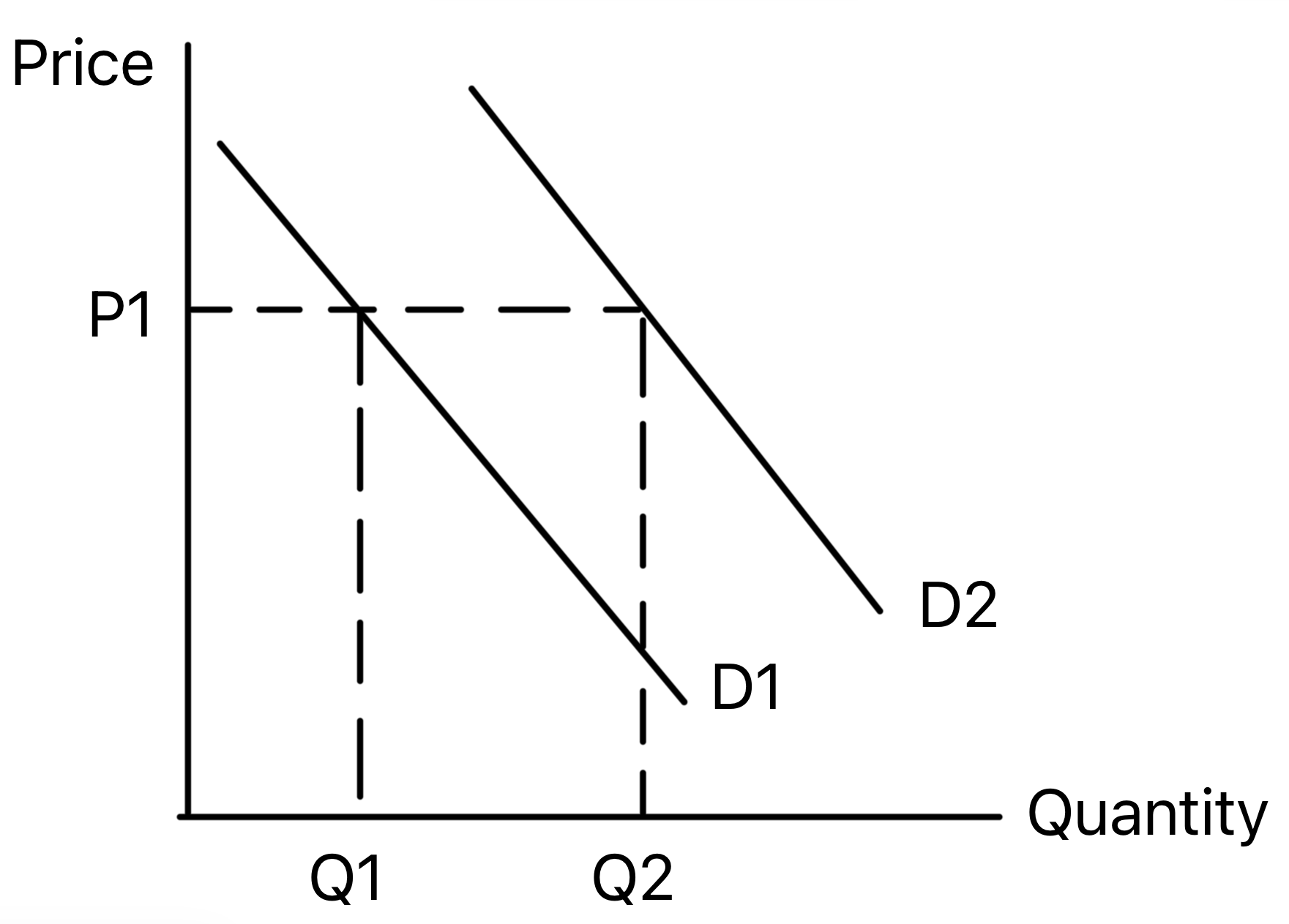
A good's own price never shifts its own demand curve. If a question says the price of a product has risen, show a contraction along the curve, not a shift left. Keep the words apart as well: "extension" and "contraction" for movements, "increase" and "decrease in demand" for shifts.
Factors That Shift the Demand Curve
Two of the factors depend on how goods are related. Substitutes: goods that can be used in place of each other, such as train and coach travel. Complements: goods that are used together, such as a games console and its games.
Real income: income adjusted for inflation, so it measures what a consumer can actually buy. Most goods are normal goods, where demand rises as real income rises. A few are inferior goods, where demand falls as real income rises because people switch to something better.
| Factor | What increases demand | Example |
|---|---|---|
| Price of a substitute | The substitute's price rises | Rail fares go up, so more people book coach tickets |
| Price of a complement | The complement's price falls | Consoles are discounted, so demand for games rises |
| Real incomes | Real incomes rise (for a normal good) or fall (for an inferior good) | Higher real incomes raise demand for holidays abroad but cut demand for supermarket value ranges |
| Tastes and fashions | The product becomes more popular, or its season comes round | A style of trainer goes viral on social media, or demand for barbecues rises as summer starts |
| Advertising and branding | A campaign works, or the brand becomes better known and trusted | A trusted brand name persuades shoppers to choose it over cheaper alternatives |
| Size and age distribution of the population | The population grows, or the age group that buys the product gets larger | As the UK population ages, demand for care homes and mobility aids rises |
Each change works in reverse too. A cheaper substitute or a product going out of fashion shifts demand to the left.
Stuck on this topic? Work through it with an online A-Level Economics tutor in a free 15-minute intro call, or send an essay on it for A-Level Economics essay marking.