The Influence of Trade Unions in Determining Wages and
Levels of Employment
AQA · Microeconomics · 1.6.5Updated
Written by
Eliot King— First-Class BSc (Hons) Economics, University of Bath · 6+ years teaching A-Level Economics · Edexcel A, Edexcel B, AQA and OCR
Specification Coverage: AQA unit 1.6.5 - The
Influence of Trade Unions in Determining Wages and Levels of
Employment. Students should understand the factors that affect the
ability of trade unions to influence wages and employment in
different labour markets, including how wages and employment are
affected by trade unions within competitive labour markets and
monopsony labour markets.
Trade Unions
Trade Union: an organisation
formed by workers to protect their rights, improve pay and
secure better working conditions.
Trade unions use their
collective bargaining power to negotiate with
employers for higher wages, by threatening industrial action
i.e. Strikes.
The power that a trade union has over its employer is dependent
on its Union Density, which measures the
proportion of the total workforce that are members of the trade
union.
\[ \text{Union Density} = \frac{\text{Number of Union Members}}{\text{Total Workforce}} \times 100 \]
Other factors that influence the power of trade unions
include:
Size of the union: Larger unions have more
bargaining power.
Profitability of the firm: Unions are more
likely to be successful in negotiations if the firm is
profitable.
Economic conditions: In a booming economy,
unions are more likely to be successful in negotiating higher
wages, as firms are more profitable and can afford to pay
higher wages.
Government policies: Governments can either
support or restrict the power of trade unions through labour
laws and regulations.
Impact of Trade Unions on Competitive and Monopsony Labour
Markets
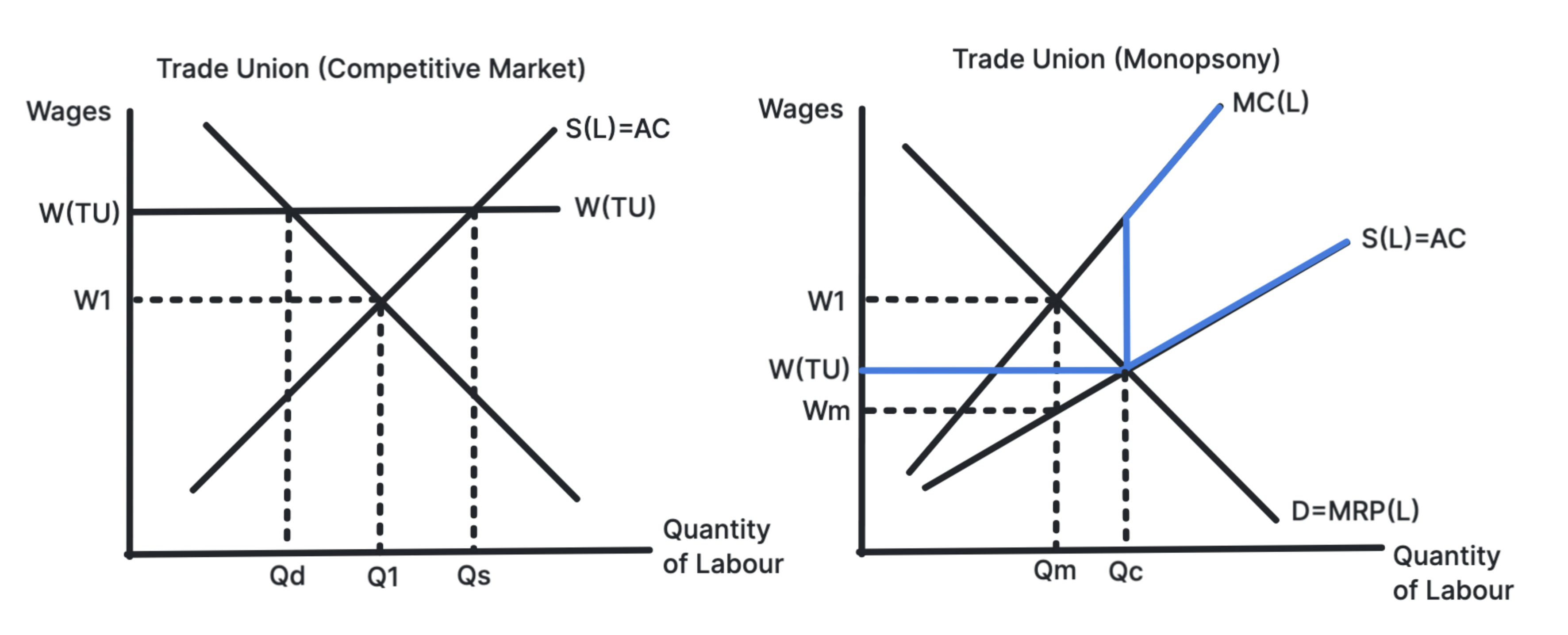
Figure 1: Trade Unions have different impacts on labour
markets depending on whether the market is competitive or a
monopsony.
In a
competitive market:
Successful trade unions increase wages from W1 to W(TU).
However, since this increases labour costs for businesses,
employment falls from Q1 to Qd. The unemployment created by the
trade union is known as
real wage unemployment.
In a monopsony: Successful
trade unions counter the power of monopsonies, creating a
bilateral monopoly, meaning there is a single buyer (the
monopsonist) and a single seller (the trade union) of labour. This results
in higher wages of W(TU) and an increase in employment from Qm
to Qc.