The National Minimum Wage
National Minimum Wage
The national minimum wage (NMW) is a legally enforced price floor set above the market equilibrium wage.
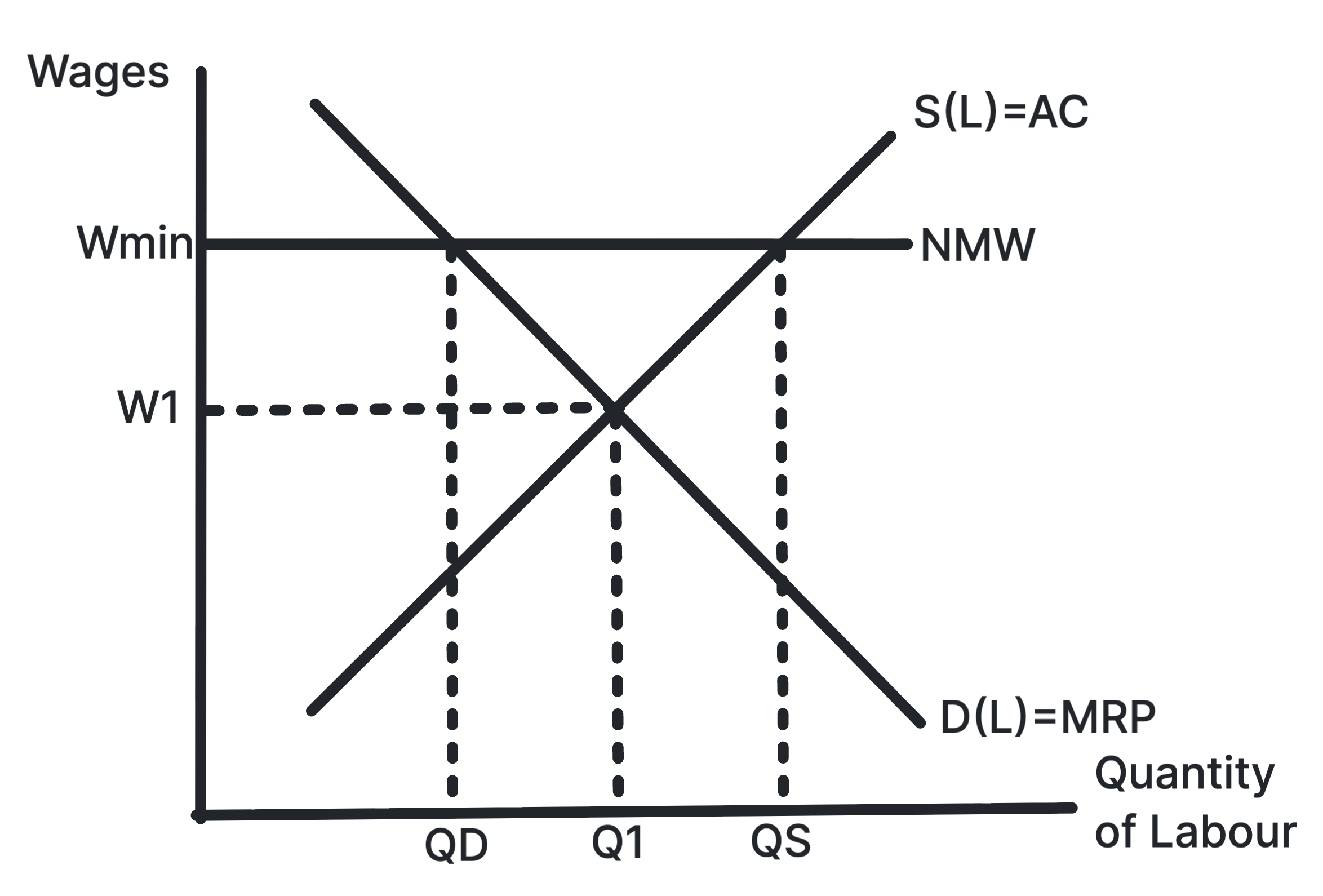
The minimum wage creates a rigid wage floor at Wmin, increasing the wages of lower income earners from W1 to Wmin. This helps to reduce income inequality.
However, minimum wages increase the costs of employing labour for businesses, and as a result the demand for labour contracts from Q1 to Qd, resulting in a lower level of employment for lower income workers. This is known as Real Wage Unemployment.
Evaluations for the impact of a minimum wage include:
- Depends on the size of the minimum wage: if the minimum wage is significantly above the equilibrium, this significantly increases incomes but creates a substantial level of real wage unemployment.
- Depends on the Wage Elasticity of Demand for Labour: if the demand for labour is wage elastic, then the unemployment created will be more significant. Minimum wages are more effective in markets with wage inelastic demand.
- Depends on improvements to worker motivation: if the higher wages cause workers to become more motivated, this may increase their productivity. As a result this offsets the rise in ATC for firms, reducing the size of the unemployment created.
Stuck on this topic? Work through it with an online A-Level Economics tutor in a free 15-minute intro call, or send an essay on it for A-Level Economics essay marking.