The Determination of Relative Wage rates and Levels of Employment in Imperfectly Competitive Labour Markets
Causes of Imperfectly Competitive Labour Markets
There are three main causes of imperfectly competitive labour markets:
- Monopsony power: when there is a single or dominant buyer of labour - this means the employer has wage setting power and can pay workers less than their marginal revenue product of labour (MRPL).
- Trade unions: organisations formed by workers to protect their rights, improve pay and secure better working conditions - trade unions use their collective bargaining power to negotiate with employers for higher wages, by threatening industrial action i.e. strikes.
- Imperfect Information: when workers do not have perfect information about the labour market, such as wage rates and job opportunities, which can lead to suboptimal employment decisions.
Monopsony Labour Market
A monopsony exists when there is a single or dominant buyer of labour. For example, the NHS is a monopsonist in the UK healthcare labour market.
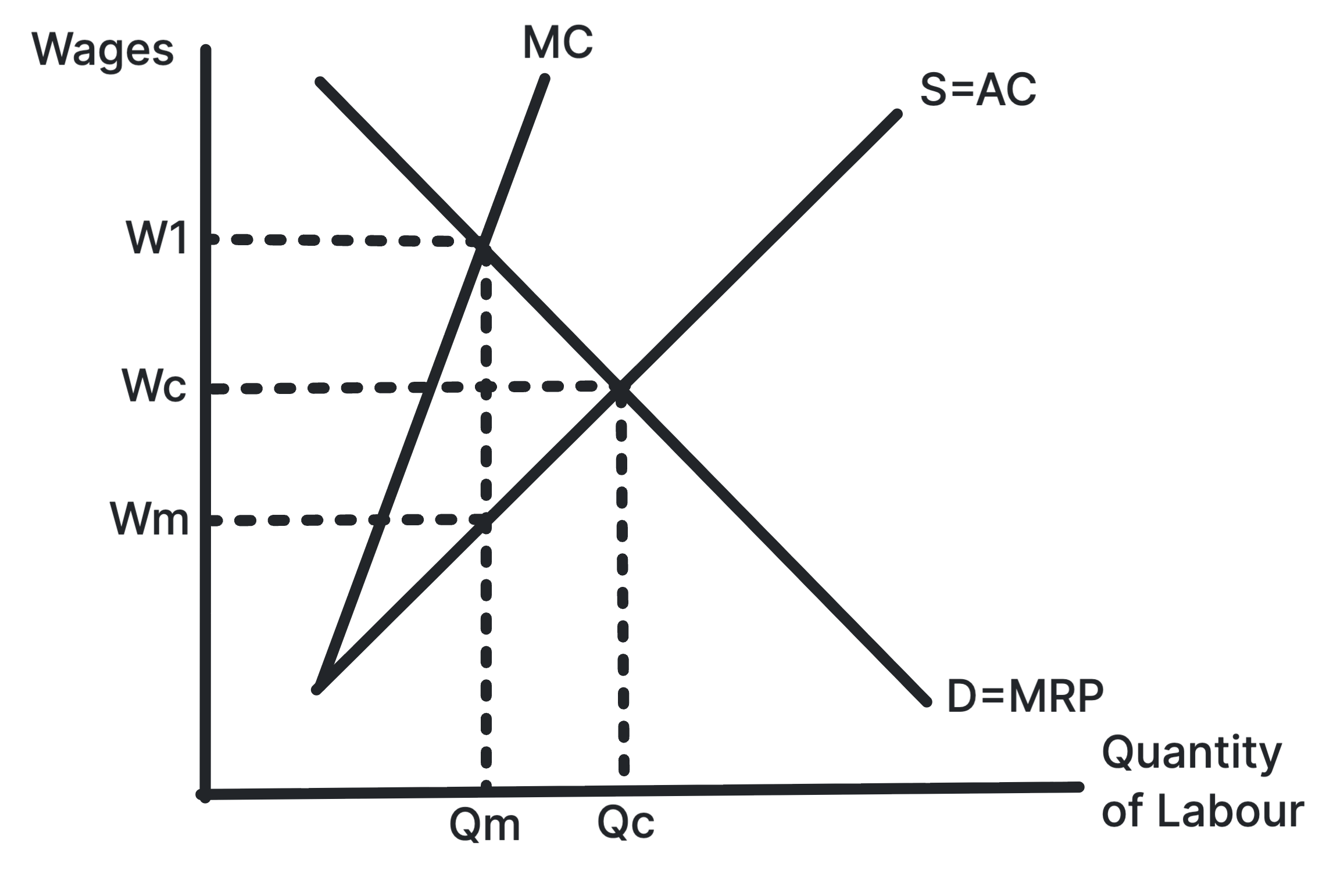
In a monopsony, the firm faces the entire labour supply curve (S=AC) and must pay a higher wage to attract more workers. Therefore, the marginal cost of labour (MCL) lies above the supply curve since the firm must also increase wages to existing workers when hiring additional ones.
The monopsonist maximises profit by hiring workers where the marginal cost of labour (MCL) equals the marginal revenue product of labour (MRPL).
Since the monopsonist has wage setting power, the monopsonist pays workers the lowest wage that they are willing to accept whilst still supplying their labour. Therefore, an equilibrium is created at (Wm, Qm), meaning a monopsony employs fewer workers and pays them a lower wage compared to a competitive labour market (Wc, Qc)
Stuck on this topic? Work through it with an online A-Level Economics tutor in a free 15-minute intro call, or send an essay on it for A-Level Economics essay marking.