The Determination of Relative Wage rates and Levels of
Employment in Perfectly Competitive Labour Markets
AQA · Microeconomics · 1.6.3Updated
Written by
Eliot King— First-Class BSc (Hons) Economics, University of Bath · 6+ years teaching A-Level Economics · Edexcel A, Edexcel B, AQA and OCR
Specification Coverage: AQA unit 1.6.3 - The
Determination of Relative Wage rates and Levels of Employment in
Perfectly Competitive Labour Markets. Students should be able to
explain the model of wage determination in a perfectly
competitive labour market, and the role of market forces in
determining relative wage rates.
Wage Determination in a Competitive Labour Market
Perfectly competitive labour market:
A labour market where there are an infinite number of identical
buyers of labour (businesses) and an infinite number of
identical workers.
In a competitive labour market, there are
many firms demanding labour and
many workers supplying labour.
Both firms and workers are wage takers, so they
accept the market equilibrium wage.
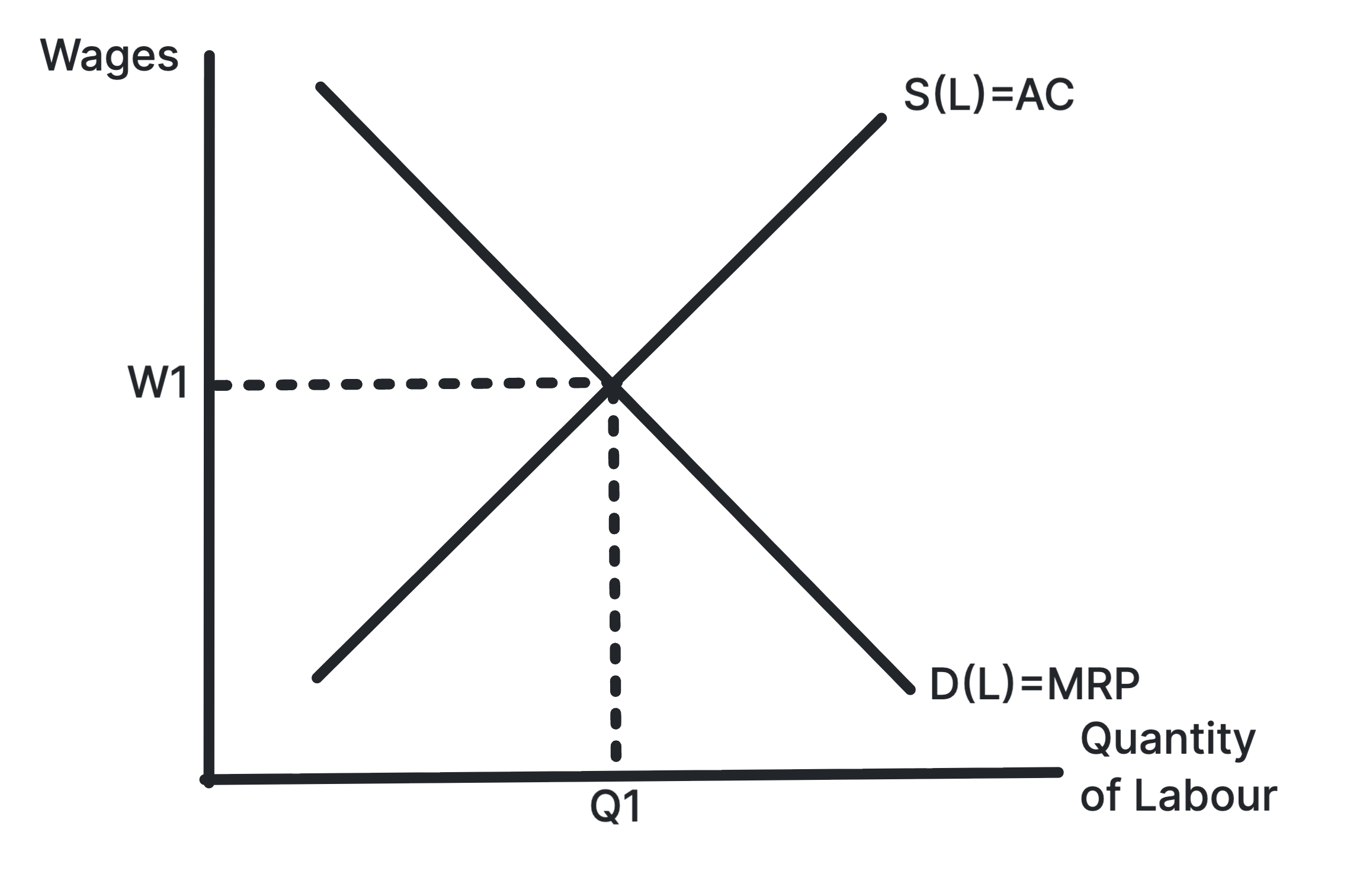
Figure 1: In a competitive labour market, the equilibrium wage
(W1) is determined at the intersection of the labour supply
(SL) and labour demand (DL) curves, with the equilibrium
quantity of labour (Q1) also determined at this point.
This results in an equilibrium wage at W1 and an
equilibrium quantity of labour at Q1 being
established in the market.
Role of Market Forces in Determining Wages and Employment
Similarly to markets for goods and services,
market forces of supply and demand determine the
equilibrium wage and
employment levels in a competitive labour market.
If the wage is above the equilibrium level,
there will be an excess supply of labour. This
will lead to a surplus of workers, and workers
will reduce wage demands to enter employment, resulting in a
fall in the wage rate and an
increase in employment until the market reaches
equilibrium again.
If the wage is below the equilibrium level,
there will be an excess demand for labour,
leading to a shortage of workers. Firms will
compete for workers by offering higher wages, resulting in an
increase in the wage rate and an
increase in employment until the market reaches
equilibrium again.