Market Failure in Society
Market Failure Across the Economy
Unit 1.5.1 defined market failure and showed how externalities cause it. This page looks wider. In each case below, the free market produces too much of something, too little, or uses resources in the wrong place, so society ends up worse off than it could be.
Under-Provision of Merit and Public Goods
Merit good: a good or service with positive externalities in its consumption or production, so it is under-provided by the free market. Education, healthcare and vaccinations are examples.
Buyers count only their private benefit and ignore the external benefit to others, so they consume less than the social optimum. Many also underestimate the private benefit itself, such as the long-term gain from staying in education.
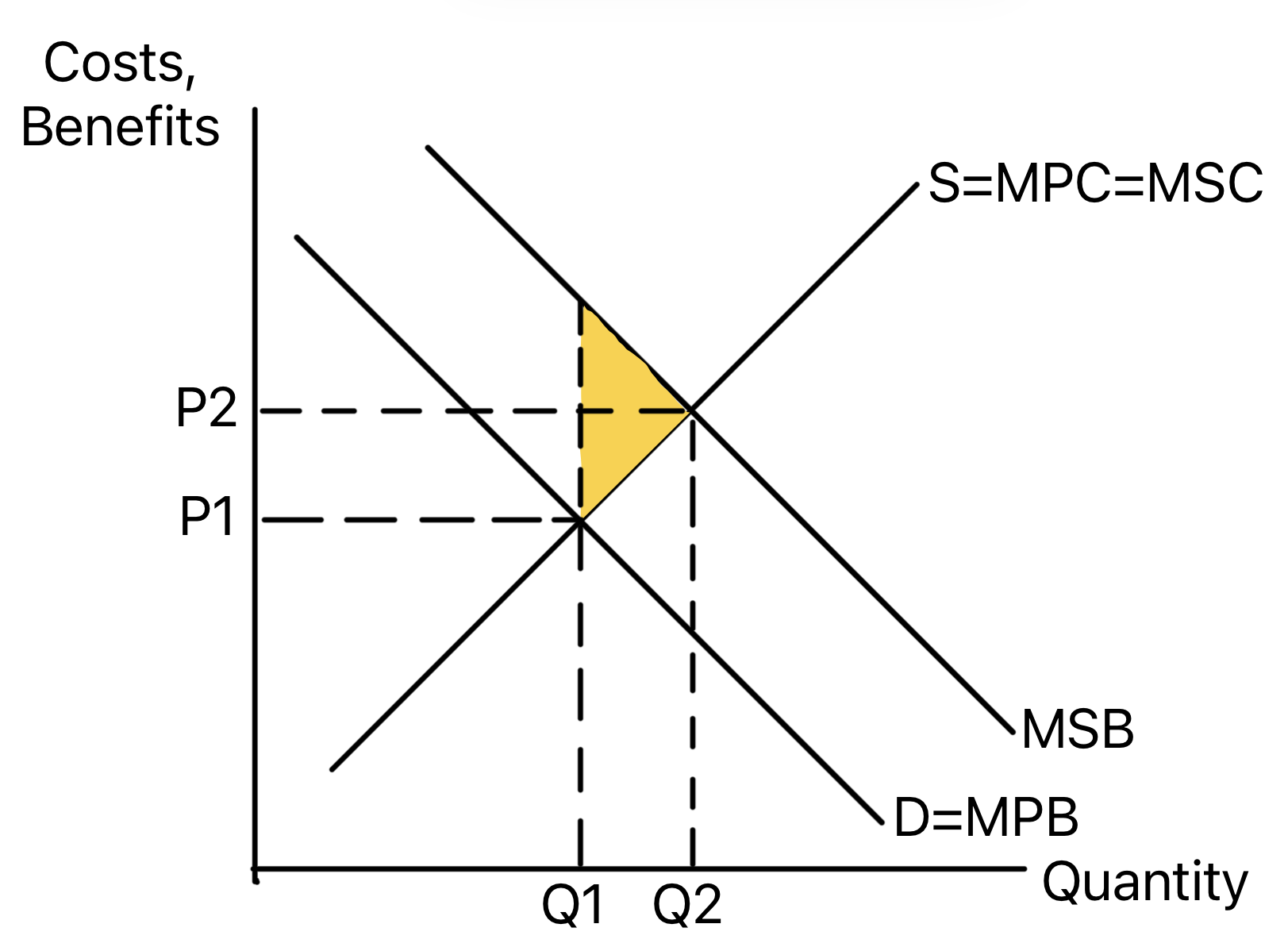
The consequences of under-consumption:
- Individuals: fewer people stay in education or train → lower skills → lower lifetime earnings.
- Firms: a less skilled, less healthy workforce → lower productivity → higher costs per unit.
- The government: poor health caught late → more costly treatment on the NHS → higher public spending.
Public good: a good that is non-excludable, so non-payers cannot be stopped from using it, and non-rival, so one person's use does not reduce what is left for others. Street lighting and flood defences are examples.
Because nobody can be made to pay, people wait for someone else to buy it. This is the free rider problem. Firms cannot make a profit, so the market provides little or none of the good, even though society values it.
Positive and Negative Externalities
Externalities are costs or benefits that fall on third parties. The market ignores them, so goods with external costs are over-produced and goods with external benefits are under-produced (unit 1.5.1). Unit 4.3.2 looks at what this means for society and the environment.
Over-Consumption of Demerit Goods
Demerit good: a good or service with negative externalities in its consumption or production, so it is over-provided by the free market. Cigarettes, alcohol and gambling are examples.
Buyers count only their private cost and ignore the harm to others, so they consume more than the social optimum. Many also underestimate the harm to themselves.
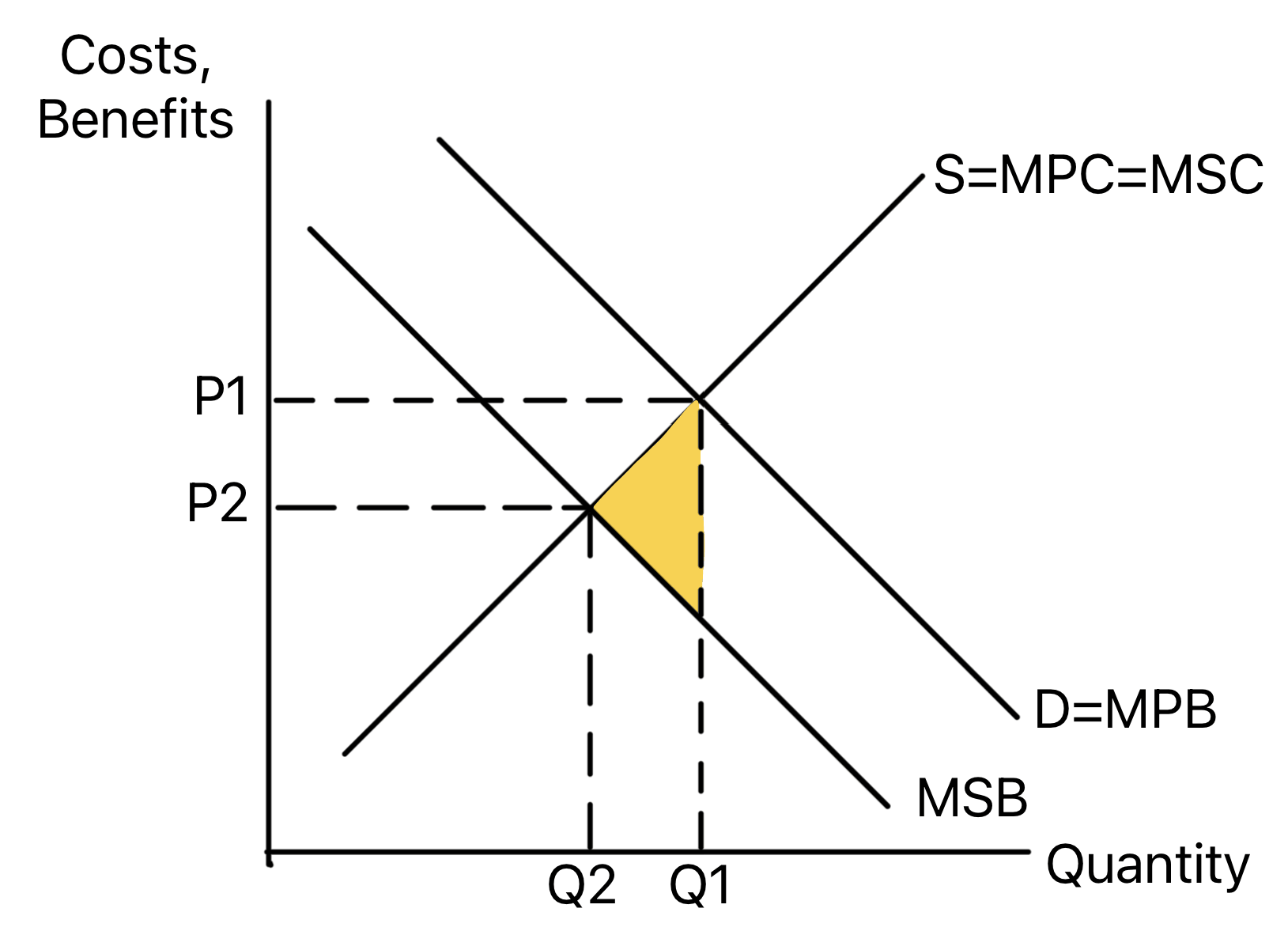
- Individuals: smoking or heavy drinking → ill health → lost earnings and a lower quality of life.
- Firms: staff off sick → lost output and cover costs → lower productivity.
- The government: more treatment and policing → higher spending on the NHS and services.
Factor Immobility
Factor immobility: when factors of production, such as labour and capital, cannot move easily between different uses or locations.
- Occupational immobility: workers lack the skills for the jobs on offer. A coal miner cannot simply become a software developer.
- Geographical immobility: workers cannot move to where the jobs are, because of housing costs, family ties or not knowing about vacancies elsewhere.
The result is a market that does not clear. A region can have unemployed workers while firms elsewhere cannot fill vacancies: jobs go unfilled → firms raise wages or turn down orders → higher costs and lost output. Meanwhile unemployment stays high where jobs have gone.
Imperfect and Asymmetric Information
Imperfect information: when buyers or sellers lack the information they need to make the best decision.
Asymmetric information: when one party to a transaction has more or better information than the other.
Imperfect information makes merit and demerit goods worse, as people misjudge their own costs and benefits. Asymmetric information lets the better-informed side take advantage. A used-car seller knows about a fault the buyer cannot see, and a builder knows whether work is really needed. Buyers who fear being misled may also stop buying altogether, so even good products go unsold.
Consequences of Environmental Change
Pollution and greenhouse gas emissions are external costs, so the market produces too much of them. The damage builds up over time and falls on people far away and on future generations, who play no part in the market.
As the climate changes:
- Firms: more floods, droughts and heatwaves → damaged property and disrupted supply chains → higher costs and insurance premiums.
- Farming: less reliable harvests → more volatile food prices → lower real incomes for households.
- Some industries gain: demand for renewable energy, insulation and flood defences rises → new investment and jobs.
- The government: flood defences, disaster relief and health costs → higher public spending.
How serious these consequences are depends on:
- Time: much of the damage comes decades after the emissions, so it is easy to ignore now.
- Location: coastal and farming regions are hit far harder than others.
- Action by other countries: emissions affect the whole planet, so one country cutting back achieves little alone.
Identify the cause before you explain the failure. Each cause on this page leads to market failure in a different way, and each needs a different policy (unit 4.3.3). Say which cause the extract shows - a merit good, factor immobility, asymmetric information - then explain why the market gets the quantity wrong.
Stuck on this topic? Work through it with an online A-Level Economics tutor in a free 15-minute intro call, or send an essay on it for A-Level Economics essay marking.