How Markets and Prices Allocate Resources
What is the Price Mechanism?
The price mechanism is the interaction of demand and supply in a free market, which determines prices. These prices are the means by which scarce resources are allocated between competing wants and needs. Adam Smith called this process the 'invisible hand'.
The Three Functions of the Price Mechanism
| Function | How it Works | Example |
|---|---|---|
| 1. Rationing | Prices allocate scarce resources to those willing and able to pay. Excess demand raises price, rationing the good. Excess supply lowers the price, making it available to more. | A limited number of concert tickets. A high price rations them to the biggest fans/highest bidders. |
| 2. Incentive | Price changes motivate producers. High prices incentivise them to supply more. Low prices incentivise them to supply less and reallocate resources elsewhere. | The price of solar panels rises. This increases profitability, incentivising firms to produce more. |
| 3. Signalling | Prices convey information about where resources are needed. A rising price signals scarcity and high demand to producers. A falling price signals surplus and low demand. | A rising global copper price signals to mining firms that supply is scarce relative to demand. |
The Price Mechanism in Action
Key Process: A change in market conditions (demand or supply) shifts the equilibrium. The resulting price change then carries out the three functions.
Example 1: Increased Demand in a Local Market
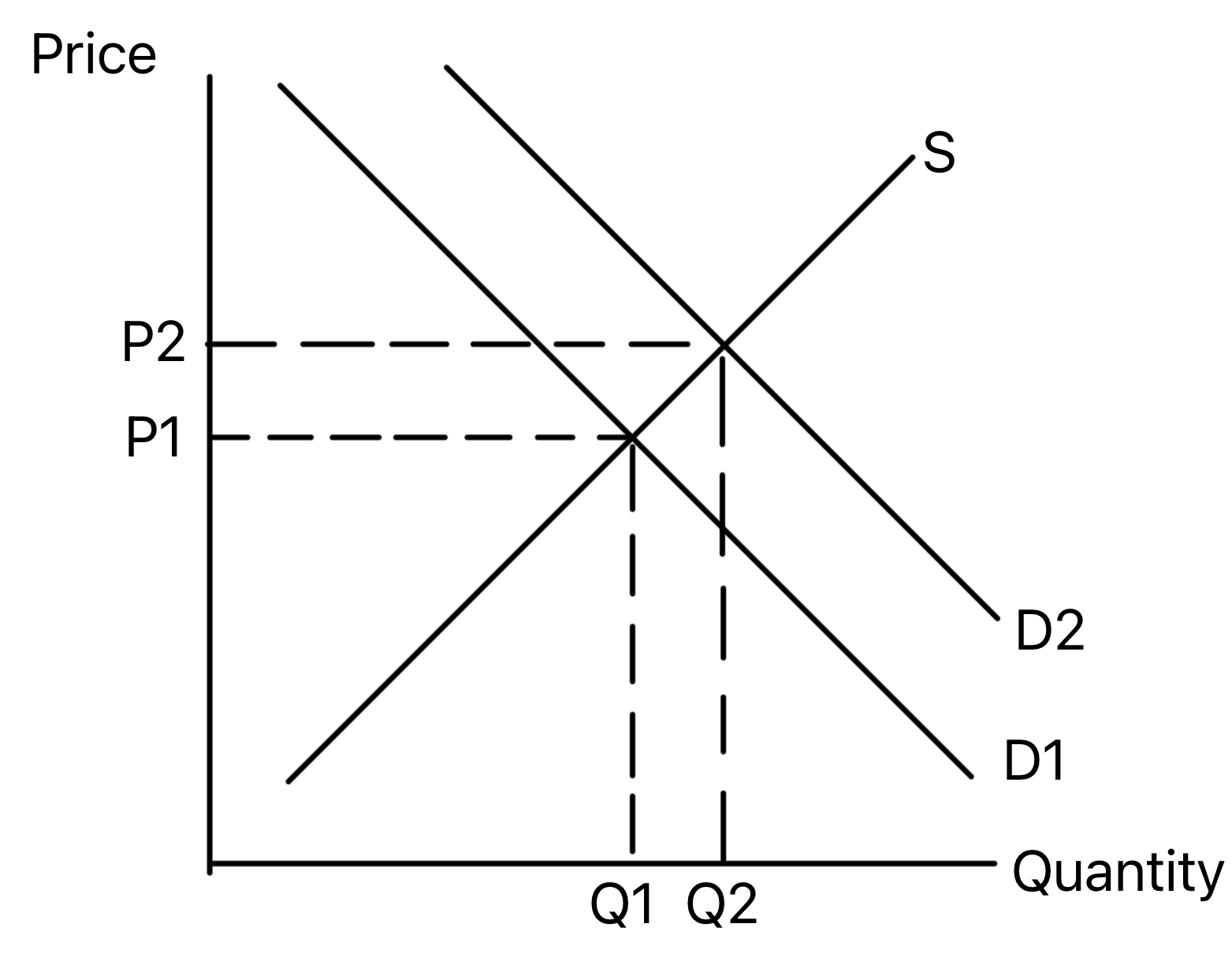
Scenario: Local honey becomes more popular (↑ tastes/fashion).
Mechanism:
- Signal: The higher price signals to producers that demand has increased and supply is relatively scarce, prompting them to increase production or new firms to enter the market.
- Incentive: The higher price increases potential profit, incentivising existing producers to extend supply (movement along S curve) and new firms to enter.
- Rationing: The higher price rations the initially limited honey to those consumers with the greatest willingness/ability to pay.
Example 2: Increased Supply in a National Market
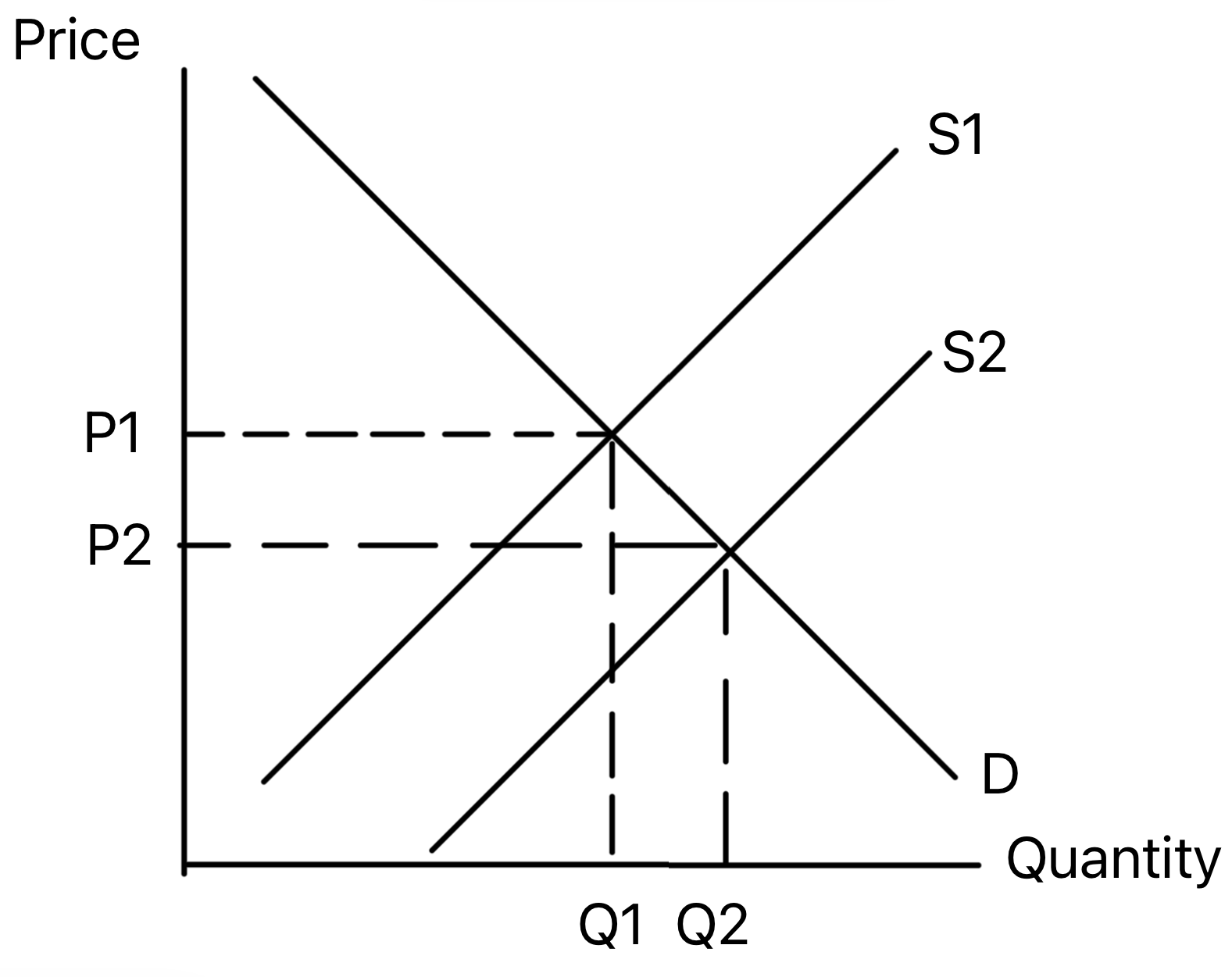
Scenario: The price of cotton falls (↓ costs of production).
Mechanism:
- Signal: The lower price signals to producers that supply has increased and demand is relatively abundant, prompting them to decrease production or reallocate resources to other goods.
- Incentive: The lower price reduces profitability, incentivising some producers to leave the market or switch to other goods.
- Rationing: The lower price makes T-shirts affordable to more consumers, rationing the increased supply more widely.
Example 3: Global Commodity Markets
Prices for crops like wheat or copper are set on global markets.
A rising world price for soybeans signals high demand, incentivising farmers worldwide to allocate more land (resources) to soybeans, and rations the existing supply.
This shows how the price mechanism allocates resources internationally.
The Advantages and Disadvantages of the Price Mechanism
| Advantages | Disadvantages |
|---|---|
| Efficient allocation of resources - The price mechanism ensures that resources are allocated to their most valued uses, as indicated by consumers' willingness to pay. | Inequality in access to goods - The price mechanism may lead to unequal access to goods and services, as those with higher incomes can afford more, while those with lower incomes may be priced out. |
| Responsive to changes in demand and supply - The price mechanism can quickly adjust to changes in market conditions, allowing for flexibility in resource allocation. | Market failures - The price mechanism may not account for externalities, public goods, or information asymmetries, leading to suboptimal outcomes. |
| Incentivises innovation and efficiency - The potential for profit encourages firms to innovate and improve efficiency, leading to better products and services. | Short-term focus - The price mechanism may encourage short-term profit maximisation at the expense of long-term sustainability or social welfare. |
Stuck on this topic? Work through it with an online A-Level Economics tutor in a free 15-minute intro call, or send an essay on it for A-Level Economics essay marking.