Merit and Demerit Goods
Merit and Demerit Goods
As mentioned in Unit 1.8.4, merit and demerit goods can be defined as:
Merit goods: goods that exhibit positive externalities in their consumption or production, and are therefore under-provided by the market. Examples include education, healthcare, and public libraries.
Demerit goods: goods that exhibit negative externalities in their consumption or production, and are therefore over-provided by the market. Examples include tobacco, alcohol, and sugary food.
However, the classification of goods as merit or demerit goods is subjective and may change over time - examples include:
- Alcohol: In the past, alcohol was considered a merit good due to its use in religious ceremonies. However, it is now considered a demerit good due to its negative externalities in consumption, such as health problems and social issues.
- Vaccinations: Vaccinations were once considered a demerit good due to concerns about their safety. However, they are now considered a merit good due to their positive externalities in preventing the spread of disease.
Diagrammatic Analysis of Merit and Demerit Goods
Merit and Demerit goods exhibit positive and negative externalities. Therefore, they are often under-provided or over-provided by the free market and can be represented by the same diagrams seen in Unit 1.8.4. Positive and Negative Externalities in Consumption and Production.
Overproduction of a Demerit Good
- What it is: the production of a demerit good imposes external costs on third parties, such as pollution, noise, or congestion.
- Example: coal-fired electricity generation creates air pollution that harms public health.
- The problem: producers consider only their private costs (MPC) and ignore external costs, so goods are over-produced and under-priced compared with the socially optimal level (Q2).
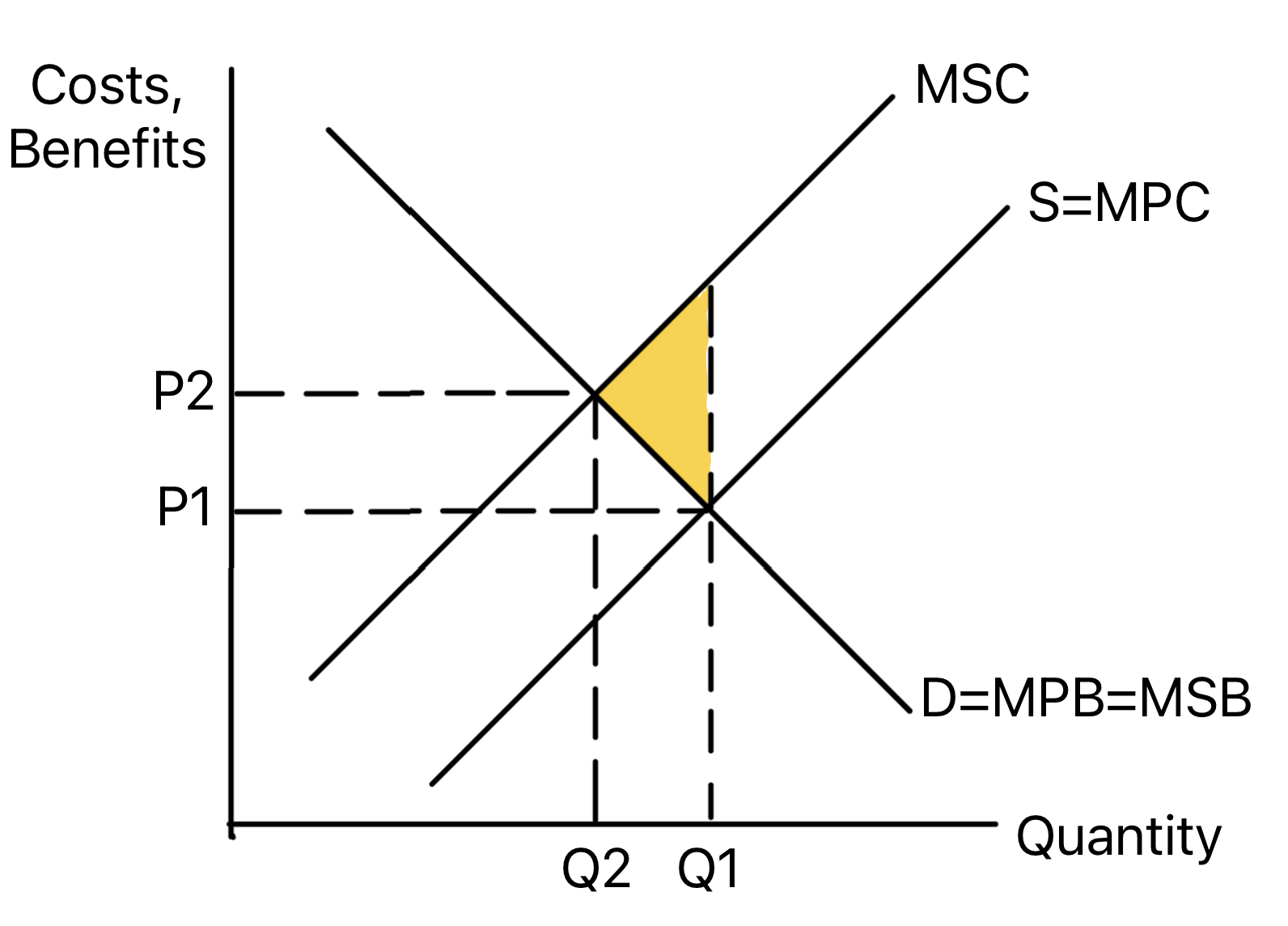
Diagram analysis: the free market produces at Q1 which is greater than Q2 (the socially optimal point). Therefore, there is over-production of the demerit good.
The shaded triangle represents the social welfare loss from over-production.
To reach the social optimum, output must fall and price must rise.
Underproduction of a Merit Good
- What it is: the production of a merit good provides external benefits to third parties.
- Example: a beekeeper's bees pollinate nearby crops, increasing agricultural yields.
- The problem: producers consider only their private costs (MPC) and ignore external benefits, so goods are under-produced and over-priced compared with the socially optimal level (Q2).
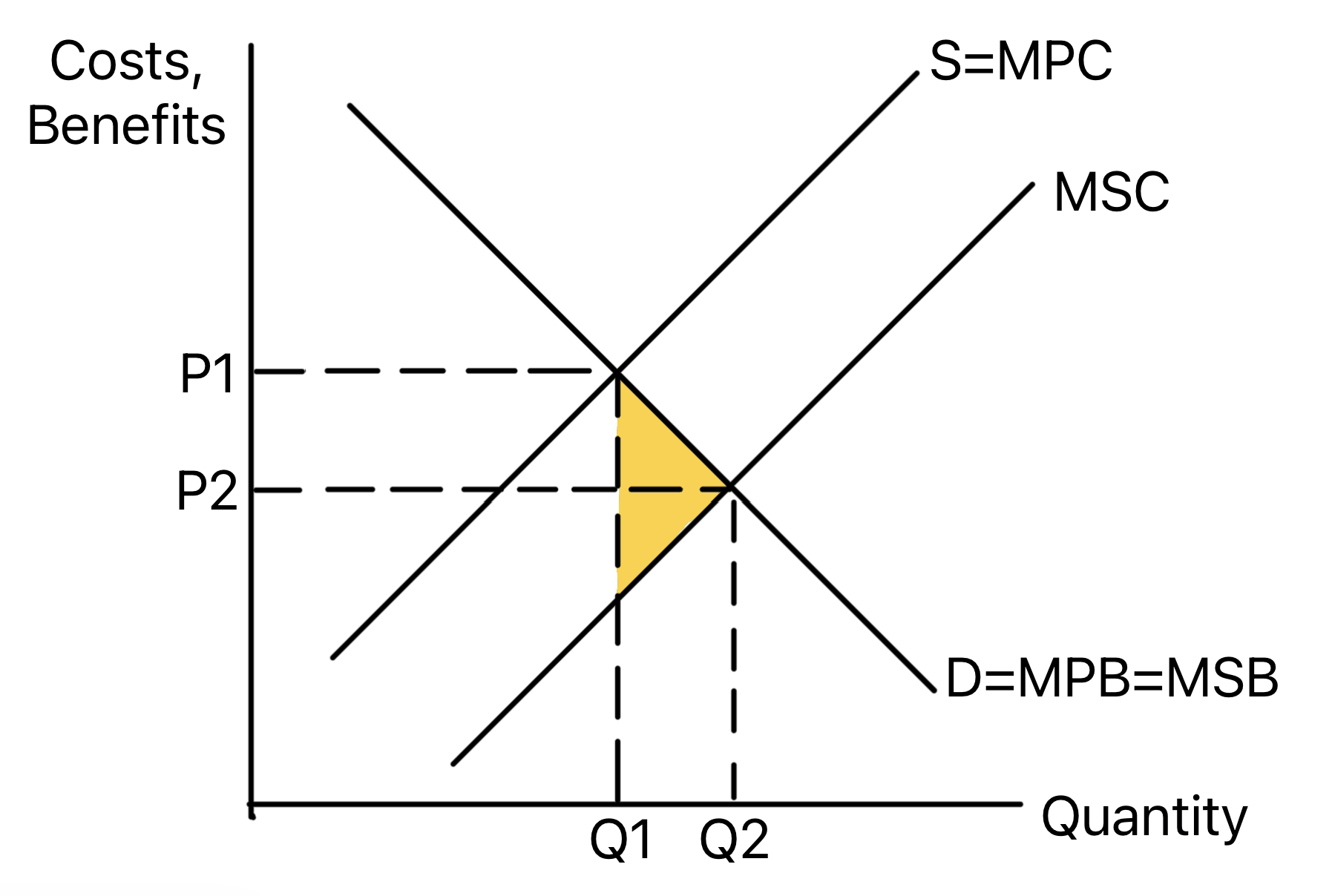
Diagram analysis: the free market produces at Q1 which is less than Q2 (the socially optimal point). Therefore, there is under-production of the merit good.
The shaded triangle represents the social welfare loss from under-production.
To reach the social optimum, output must increase and price must fall.
Underconsumption of a Merit Good
- What it is: the consumption of a merit good provides external benefits to third parties.
- Example: education benefits the individual but also creates a more productive workforce and lower crime rates for society. These are merit goods.
- The problem: consumers consider only their private benefits (MPB) and ignore external benefits, so merit goods are under-consumed and under-produced compared with the socially optimal level.
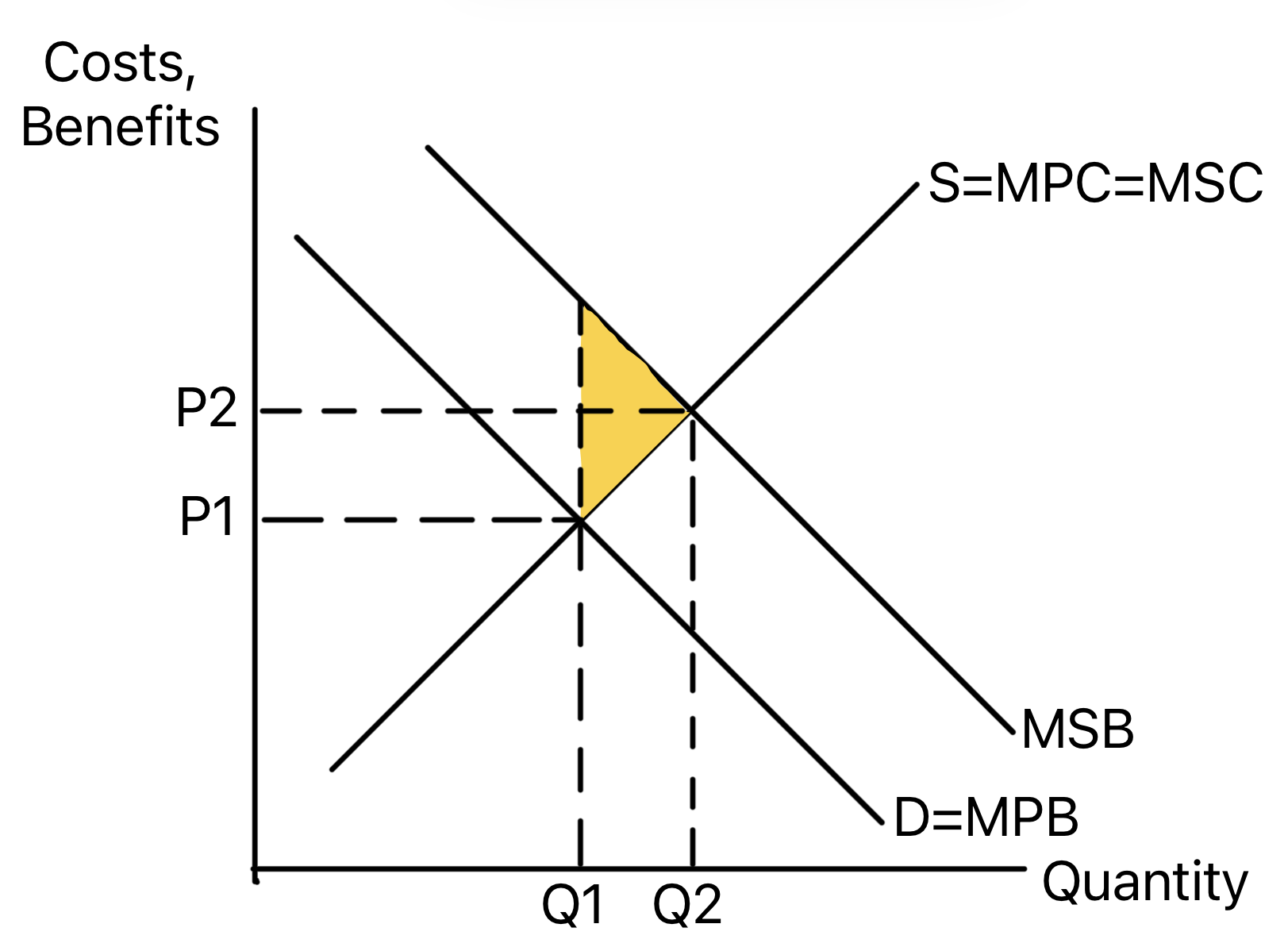
Diagram analysis: the free market consumes at Q1 which is less than Q2 (the socially optimal point). Therefore, there is under-consumption of the merit good.
The shaded triangle represents the social welfare loss from under-consumption.
To reach the social optimum, output and consumption must increase.
Overconsumption of a Demerit Good
- What it is: the consumption of a demerit good imposes external costs on third parties.
- Example: smoking cigarettes harms the health of non-smokers through second-hand smoke. These are demerit goods.
- The problem: consumers consider only their private benefits (MPB) and ignore external costs, so demerit goods are over-consumed and over-produced compared with the socially optimal level.
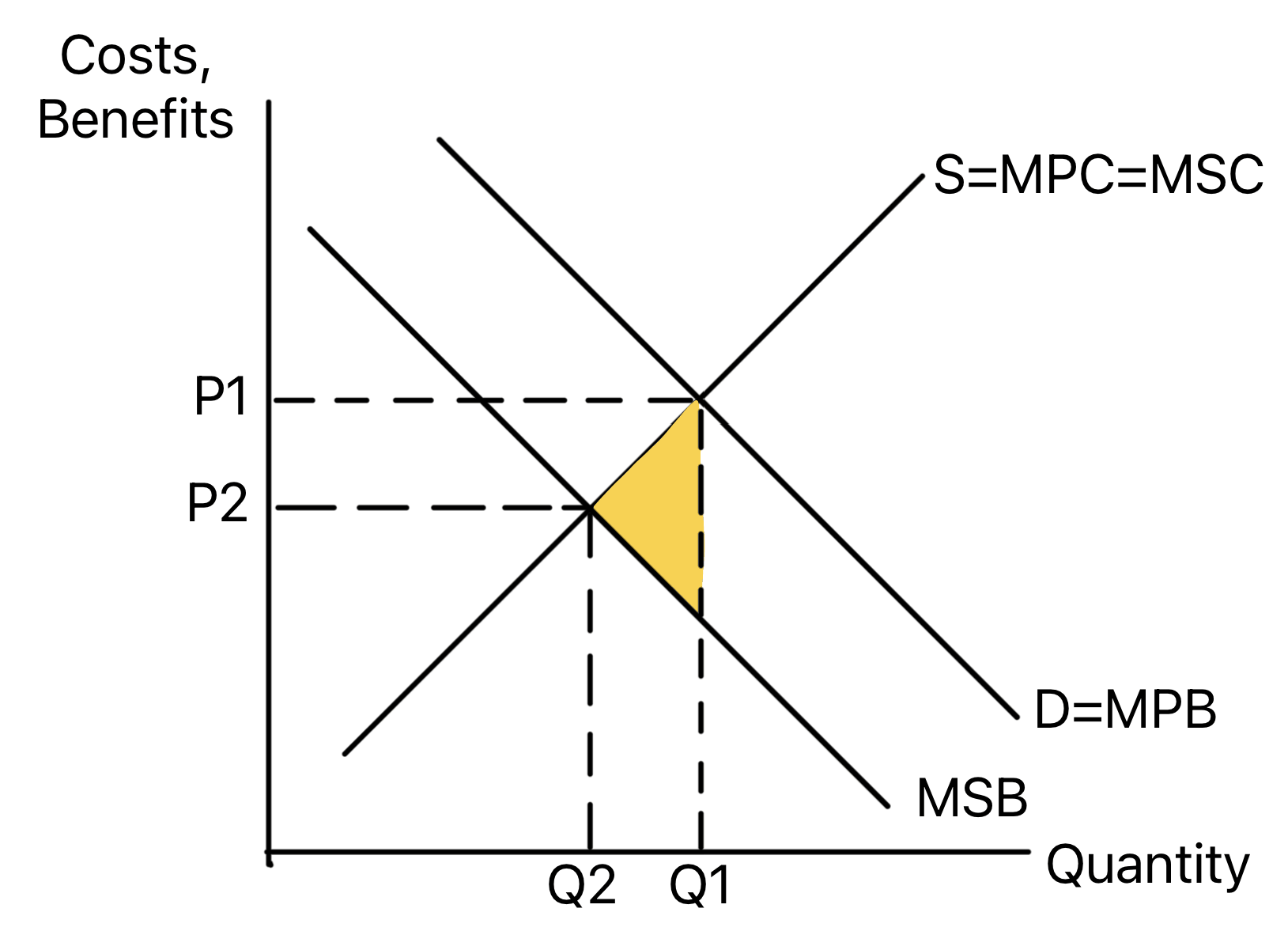
Diagram analysis: the free market consumes at Q1 which is greater than Q2 (the socially optimal point). Therefore, there is over-consumption of the demerit good.
The shaded triangle represents the social welfare loss from over-consumption.
To reach the social optimum, output and consumption must decrease.
Imperfect Information
Imperfect information can lead to the under-consumption of merit goods and the over-consumption of demerit goods. This is because consumers may not be aware of the full benefits or costs of consuming these goods.
For example, consumers may not be aware of the health benefits of eating fruits and vegetables, leading to under-consumption of these merit goods. Conversely, consumers may not be aware of the health risks of smoking, leading to over-consumption of this demerit good.
Stuck on this topic? Work through it with an online A-Level Economics tutor in a free 15-minute intro call, or send an essay on it for A-Level Economics essay marking.