The Interrelationship between Markets
The Interrelationship between Markets
| Relationship | Explanation | Examples |
|---|---|---|
| Joint Demand | When two goods are demanded/consumed together - also known as Complementary goods. | Cars and Petrol |
| Competitive Demand | When two or more goods can be used for the same purpose - also known as Substitute goods. | Butter and margarine |
| Composite Demand | When an input is demanded for multiple production purposes, but can only be used for one purpose at a time. | Milk - can either be used to produce cheese or butter. |
| Derived Demand | When the demand for a good is determined by the demand for another good. | Demand for steel derived from demand for cars |
| Joint Supply | When the production of two goods is generated from the same source or process. | Beef and leather - both produced from cows |
Diagram Analysis
Joint Demand
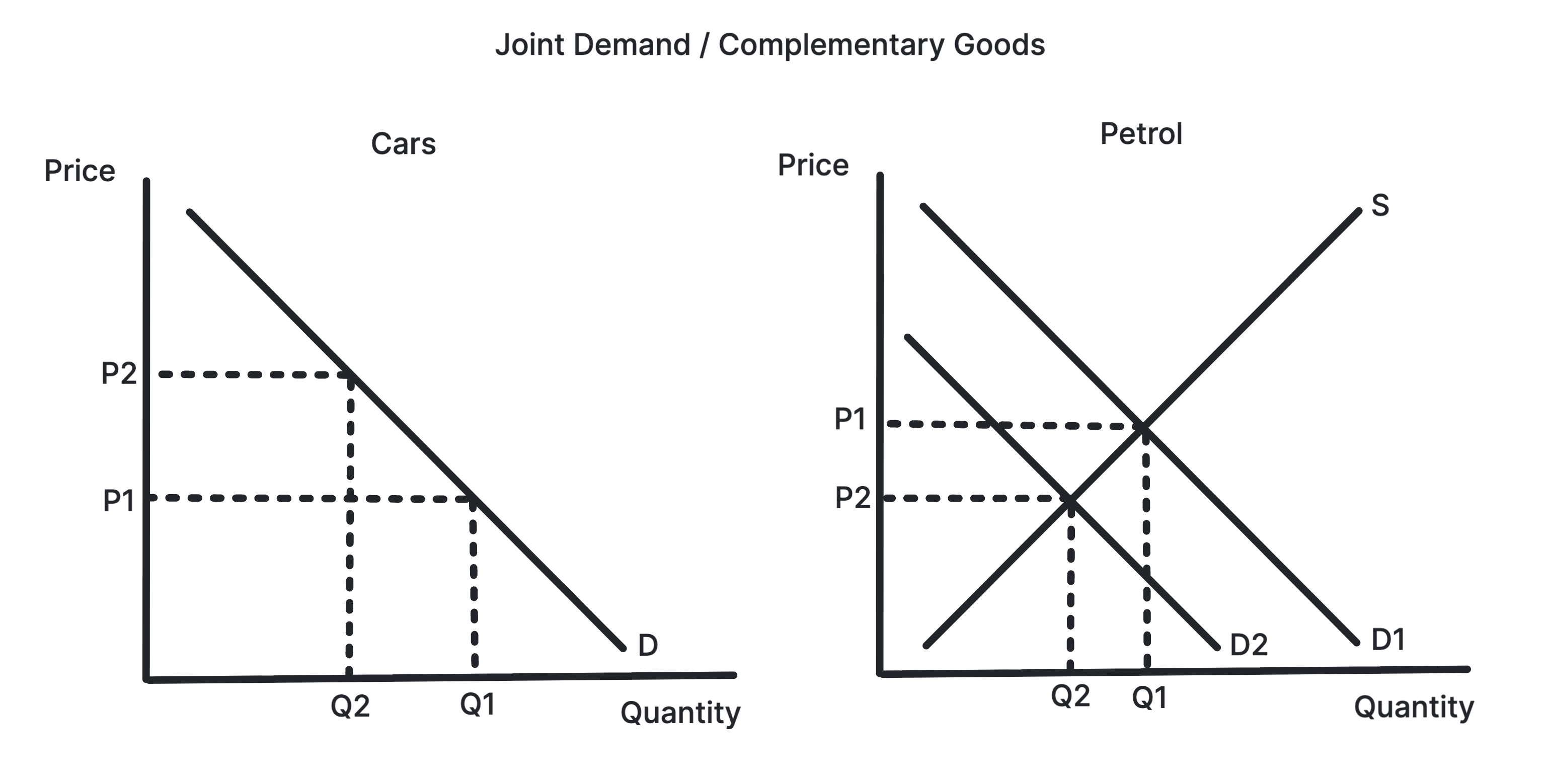
In the diagram above, we can see that a rise in the price of cars (P1 to P2) has caused a fall in the demand for petrol (D1 to D2). This is because cars and petrol are complementary goods.
Competitive Demand
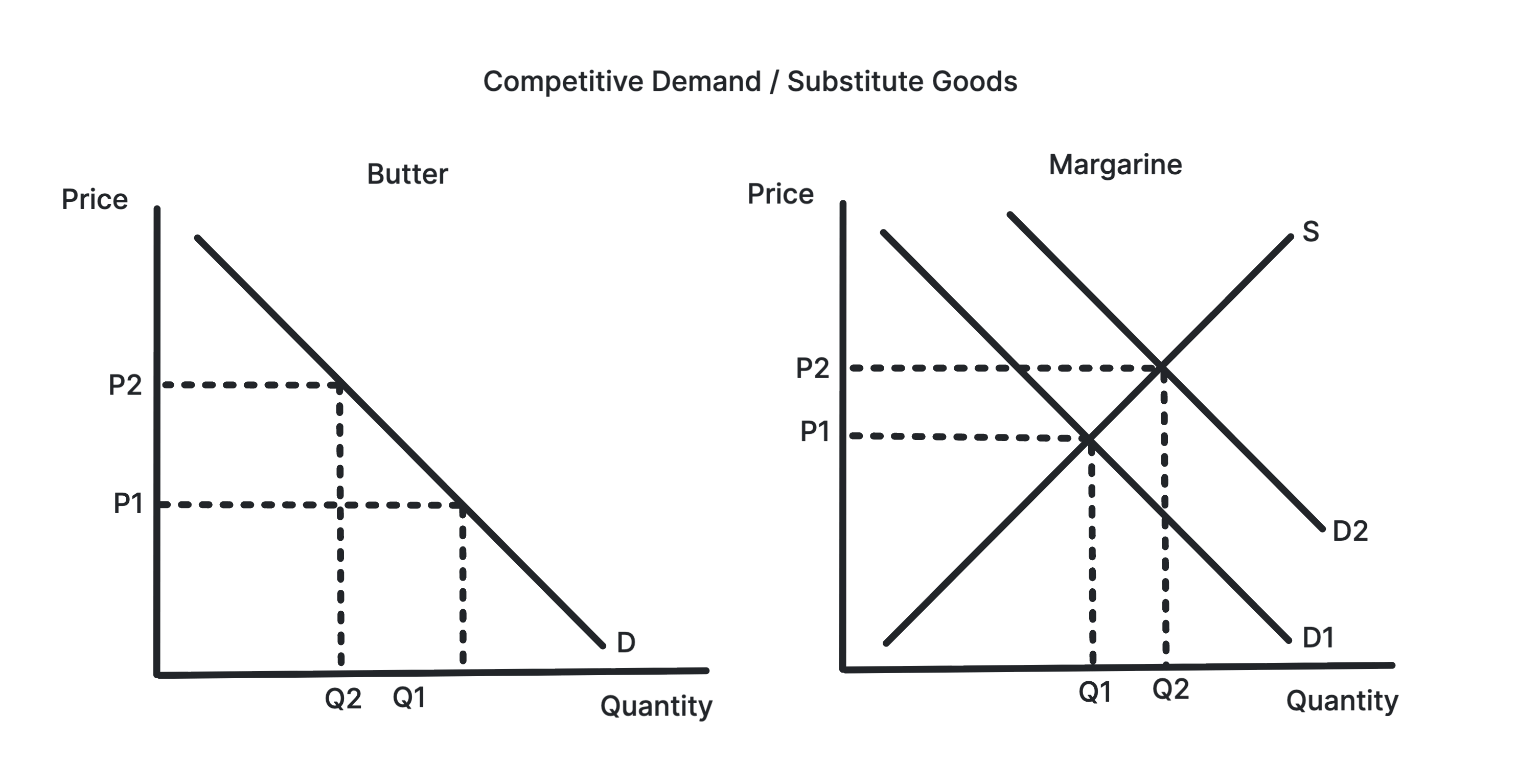
In the diagram above, we can see that a rise in the price of butter (P1 to P2) has caused a rise in the demand for margarine (D1 to D2). This is because butter and margarine are substitute goods.
Composite Demand
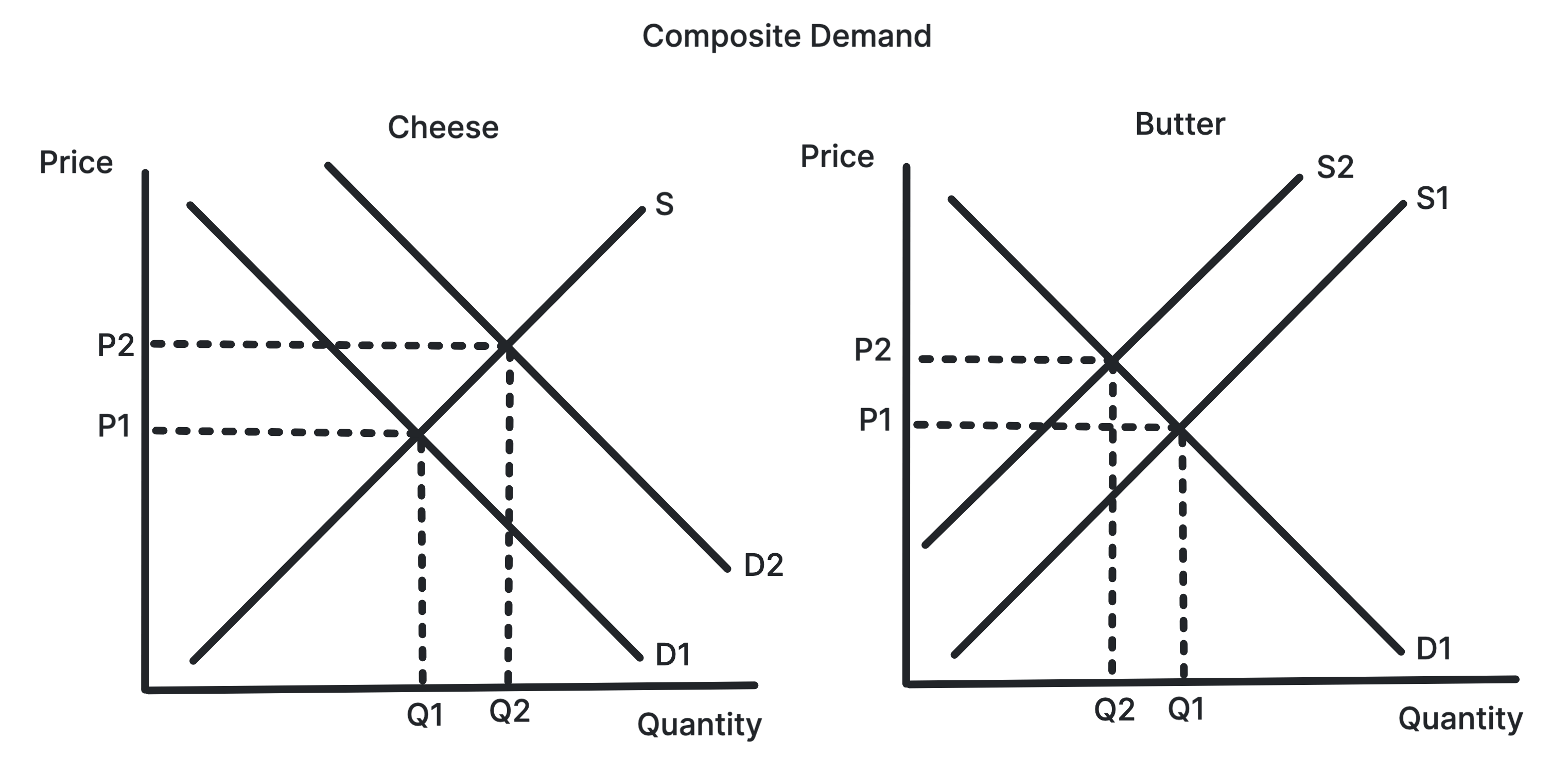
In the diagram above, we can see that a rise in the demand for cheese (D1 to D2) has caused a fall in the supply of butter (S1 to S2). This is because milk is a composite good, and can only be used to produce either cheese or butter at a time.
Derived Demand
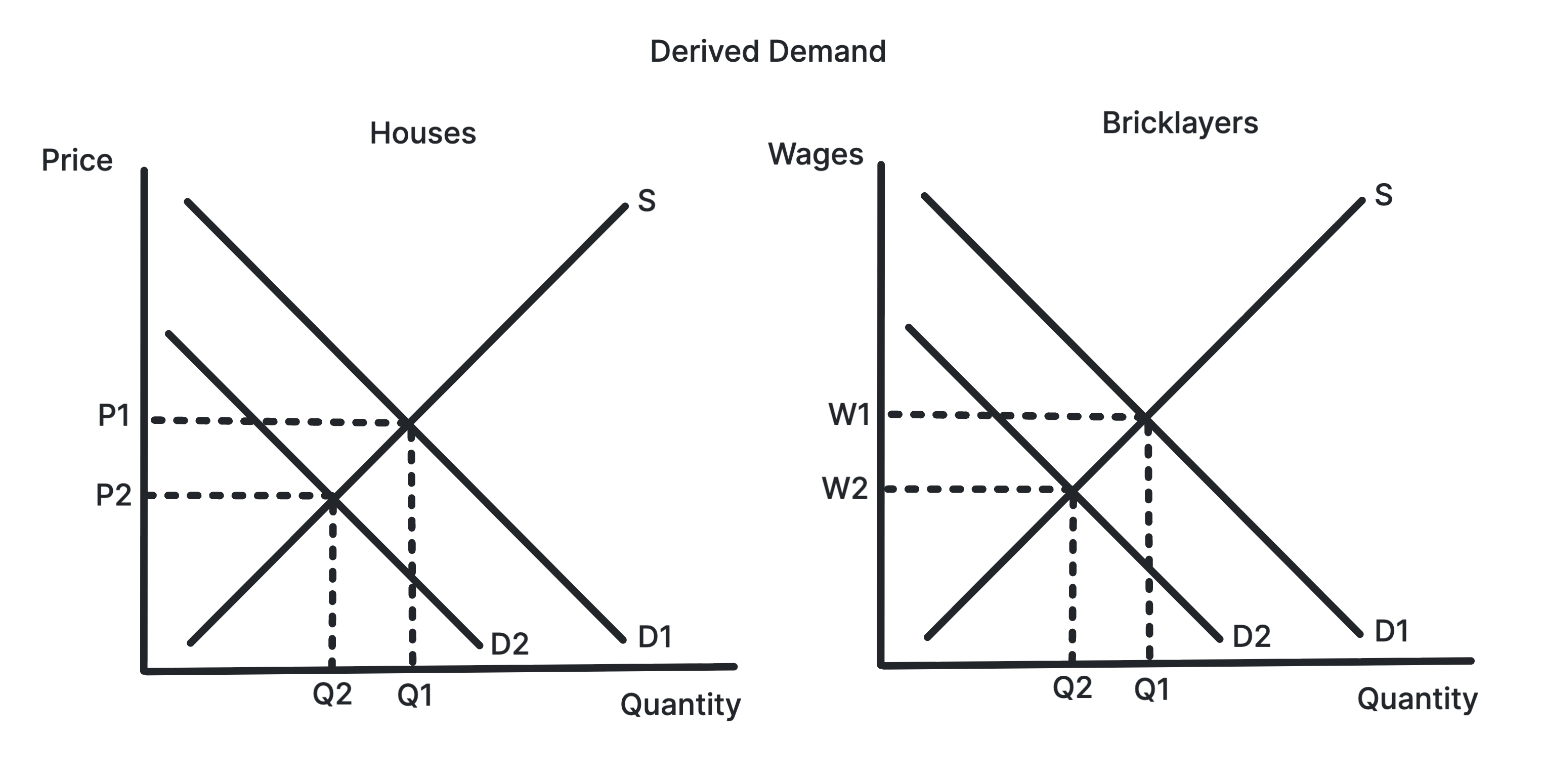
In the diagram above, we can see that a fall in the demand for houses (D1 to D2) has caused a fall in the demand for bricklayers (D1 to D2). This is because the demand for bricklayers is derived from the demand for houses.
Joint Supply
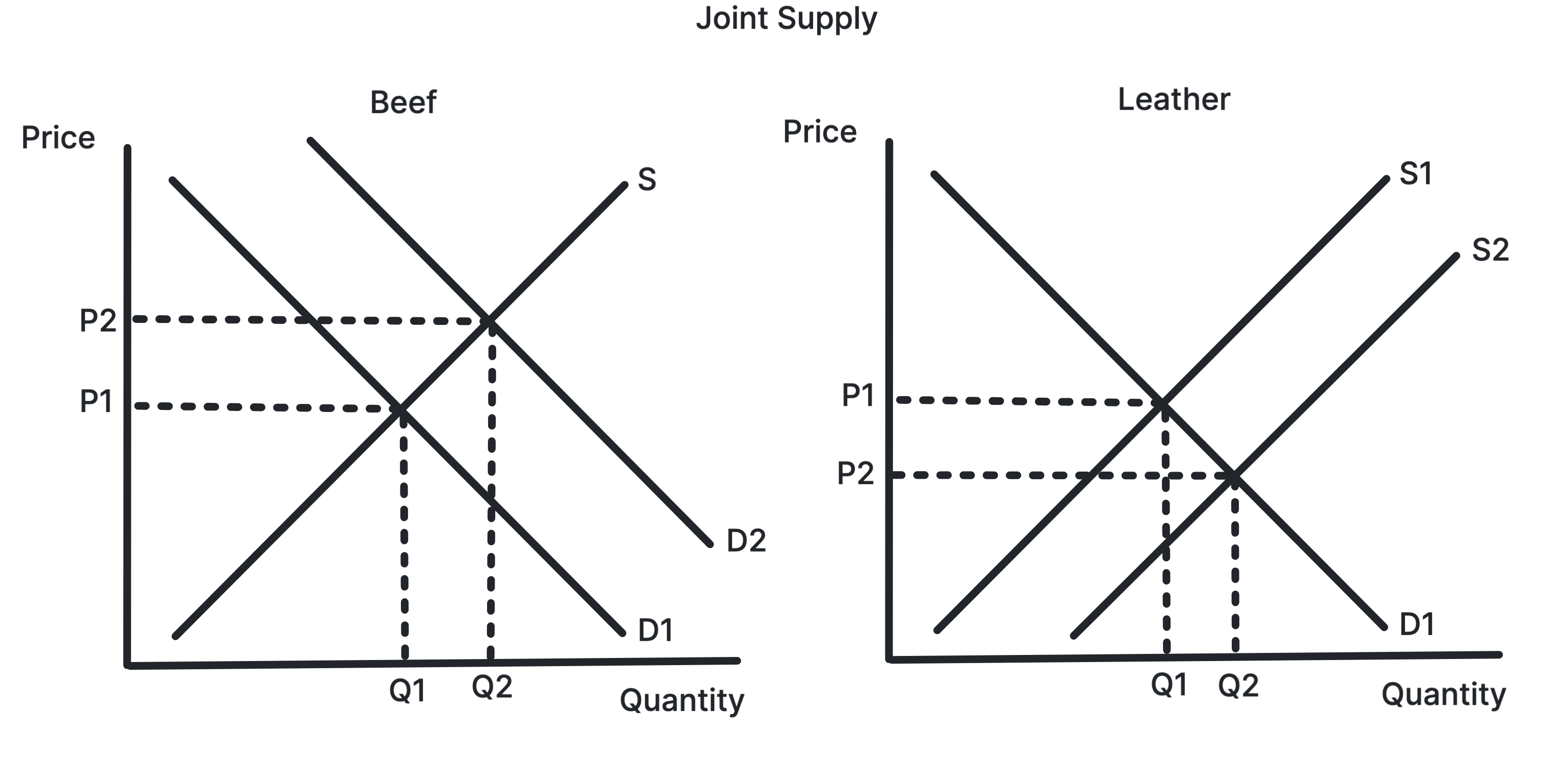
In the diagram above, we can see that a rise in the demand for beef (D1 to D2) has caused a rise in the supply of leather (S1 to S2). This is because the rise in demand for beef causes an extension in the supply of beef. Therefore, more cows are being produced, which means that more leather is also being produced as a by-product of beef.
Stuck on this topic? Work through it with an online A-Level Economics tutor in a free 15-minute intro call, or send an essay on it for A-Level Economics essay marking.