Supply of Labour
The Supply of Labour
Supply of Labour is the quantity of workers willing and able to work at a given wage rate.
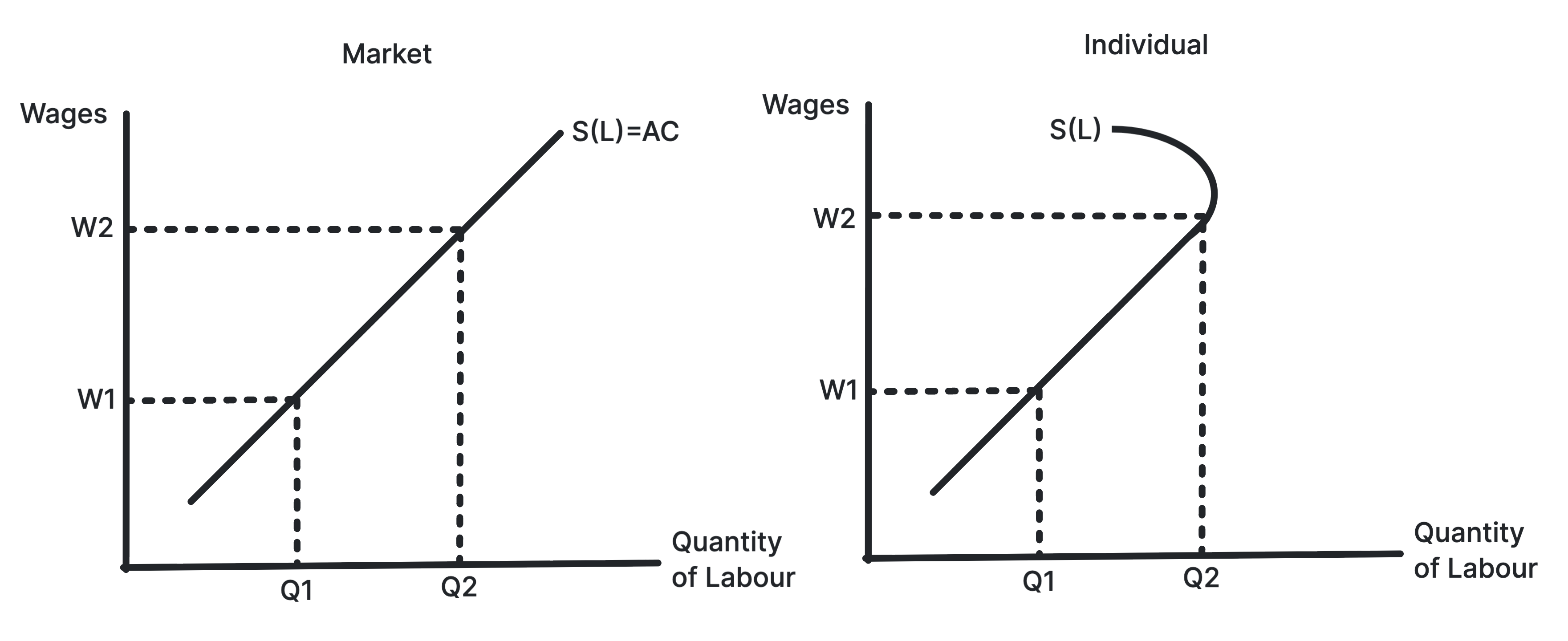
For an individual, the supply curve may bend backwards at very high wages because the income effect becomes greater than the substitution effect.
- Substitution effect: As wages rise, the opportunity cost of leisure increases, so workers are incentivised to work more hours.
- Income effect: As wages rise, workers can afford to work fewer hours and maintain the same standard of living, so they may choose to work less.
For a market or occupation, the supply curve is usually upward sloping, because higher wages encourage more workers to enter the job.
Factors That Shift the Supply of Labour Curve
A change in any factor other than the wage that affects willingness or ability to work in an occupation shifts the whole supply curve.
| Factor | Explanation |
|---|---|
| Monetary Benefits | Stock options, bonuses, or overtime pay make a job more attractive, so the supply of labour increases. |
| Non-Monetary Benefits | Better working conditions, flexible hours, or healthcare benefits make a job more attractive, so the supply of labour increases. |
| Demographic Changes | An increase in the working-age population or changes in labour force participation rates can shift the supply curve. |
| Migration Policies | Government policies that facilitate or restrict migration can affect the supply of labour in different regions. |
| Education and Training | Access to education and training can increase the supply of labour by improving workers' skills and employability. |
| Taxation and Welfare Benefits | Tax policies and welfare benefits can influence the decision to work, affecting the supply of labour. |
Labour Mobility and Market Failure
Labour immobility is an important cause of market failure in labour markets because it can lead to structural unemployment and skill shortages.
Geographical Immobility
Geographical immobility means workers cannot move easily to areas where jobs are available, or are unaware of job opportunities in other regions.
Causes include high house prices or rent, expensive transportation, lack of information, and regional differences in living costs.
Occupational Immobility
Occupational immobility means workers cannot move easily between jobs or industries because their skills do not match.
Causes include lack of transferable skills, the need for specific training or qualifications, and technological change.
Government Policies to Improve Mobility
- Occupational mobility: Education and training programmes, apprenticeships, and career guidance can help workers acquire new skills and transition to different occupations.
- Geographical mobility: Subsidised housing, relocation assistance, improved transportation, and better access to information about job opportunities can help workers move to areas with more employment options.
Wage Elasticity of Supply of Labour
The wage elasticity of supply of labour measures how responsive the quantity of labour supplied is to a change in the wage rate.
It is influenced by several factors:
- Time period: Supply is more elastic in the long run because workers have more time to acquire new skills or change occupations.
- Availability of substitutes: If there are many alternative ways to provide labour, the supply is more elastic.
- Occupational mobility: If workers can easily switch between jobs or industries, the supply is more elastic.
- Geographical mobility: If workers can easily move to areas with higher wages, the supply is more elastic.
- Available pool of labour: A larger pool of unemployed available labour increases the supply elasticity.
- Vocational aspect: If the occupation requires specific skills or qualifications, the supply is less elastic.
Stuck on this topic? Work through it with an online A-Level Economics tutor in a free 15-minute intro call, or send an essay on it for A-Level Economics essay marking.