Efficiency
Types of Efficiency
| Type of Efficiency | Condition | Meaning and Implication |
|---|---|---|
| Allocative Efficiency | Production at the point where AR = MC (D = S) | Resources are allocated to produce the optimal mix of goods and services that meet the wants and needs of society, maximising society's welfare. |
| Productive Efficiency | Production at the lowest point on the average cost curve, where MC = AC | Resources are used in the most efficient way possible, minimising costs of production and maximising output. |
| Dynamic Efficiency | Supernormal profits must be present in the Long Run | Firms can reinvest supernormal profits into research and development, leading to innovation and improved quality products and productive efficiency over time. |
| X-Inefficiency | A lack of competition or lack of profit incentive must be present | A lack of competition or lack of profit incentive causes a firm to become organisationally slack (lazy), leading to higher ATC. |
Static Efficiency: Resources are both allocated and utilised in the most efficient way possible at a given point in time. This requires both allocative and productive efficiency.
Efficiency in Perfect Competition
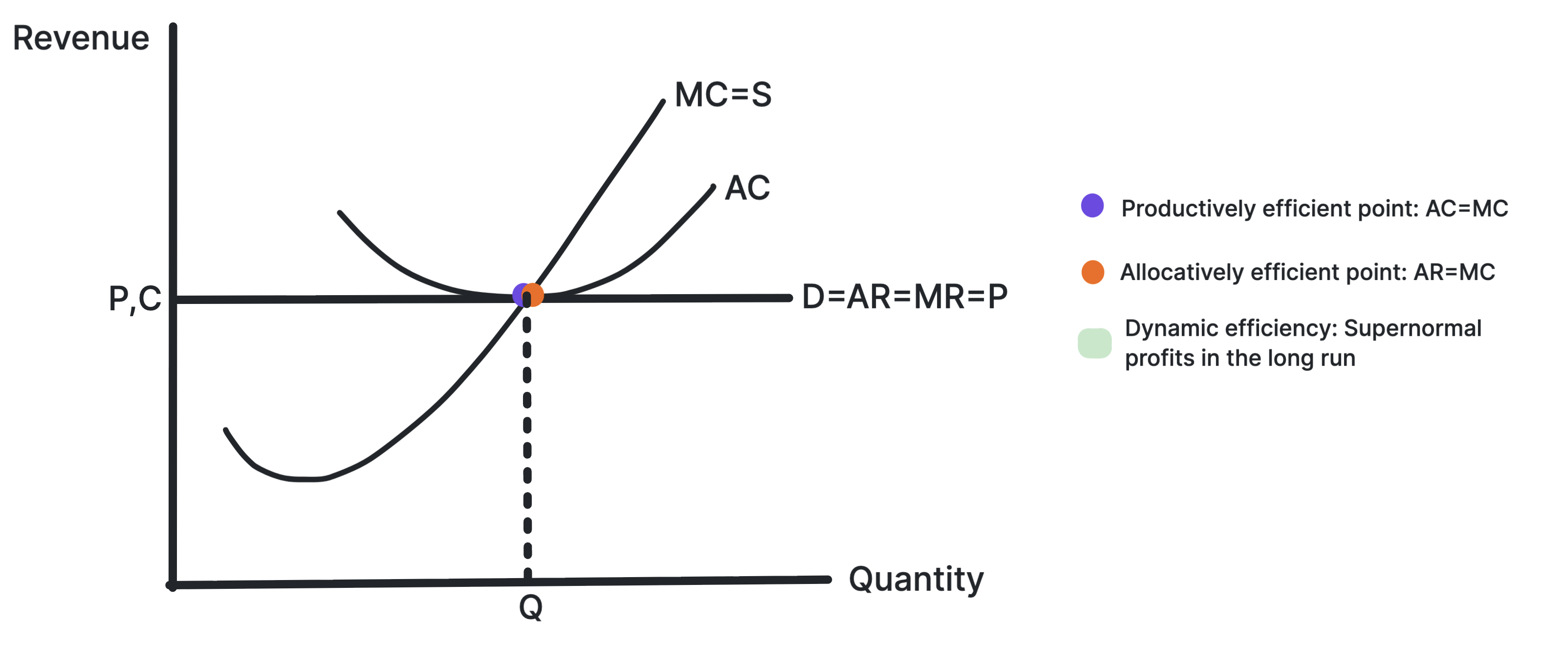
In long-run equilibrium, a perfectly competitive market is both allocatively efficient because P = MC and productively efficient because production takes place at minimum AC.
However, perfect competition may lack dynamic efficiency because firms do not earn supernormal profits to reinvest.
Efficiency in Imperfect Competition
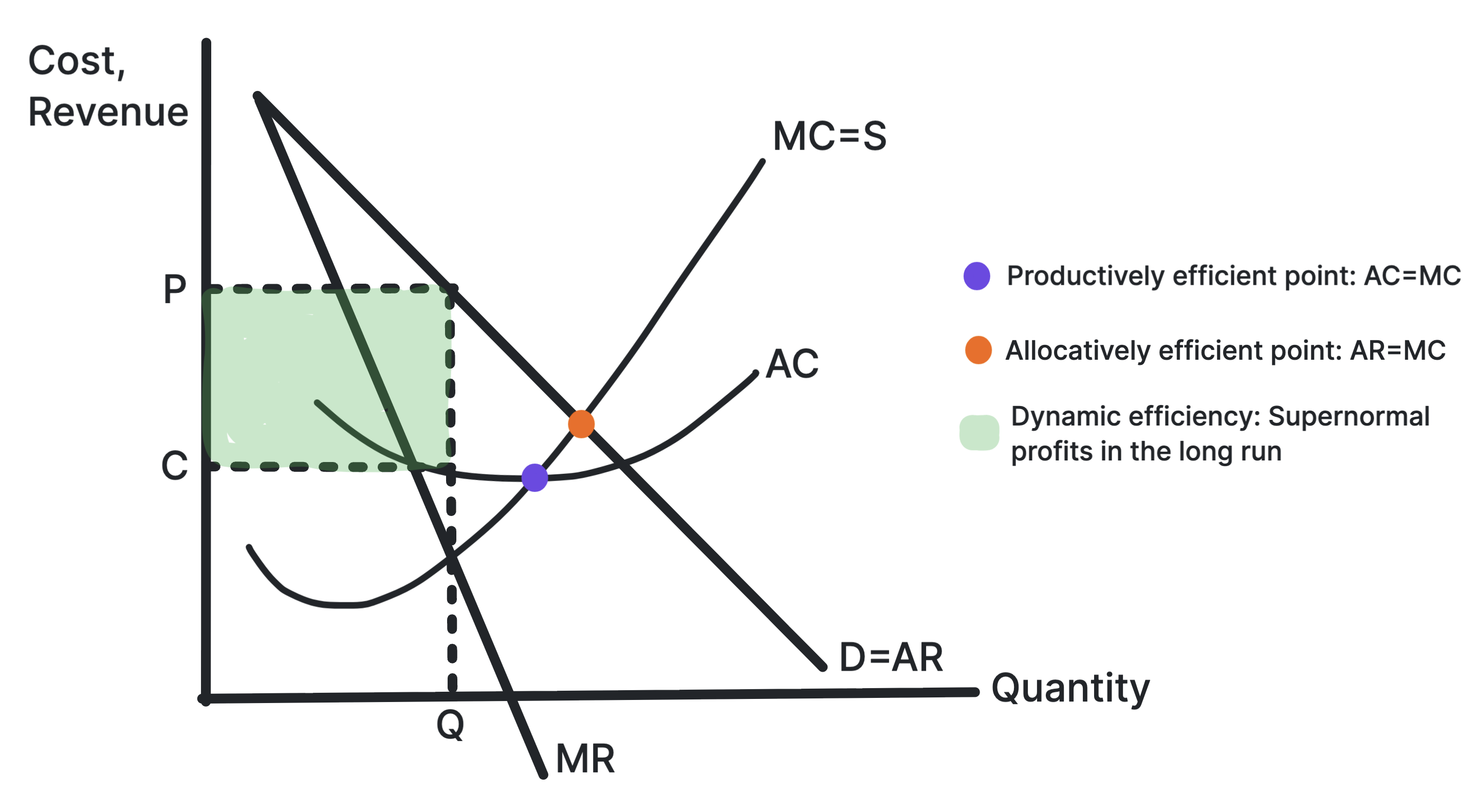
Inefficiency in Imperfect Competition
Allocative inefficiency: The firm is not producing at the point where P = MC, so there is underproduction and a deadweight welfare loss to society.
Productive inefficiency: The firm is not producing at the minimum point of the AC curve, so there is higher than necessary costs.
Potential for Dynamic Efficiency
If P > AC, the firm earns supernormal profit, which can be reinvested in research and development. This gives imperfect competition the potential for dynamic efficiency.
Stuck on this topic? Work through it with an online A-Level Economics tutor in a free 15-minute intro call, or send an essay on it for A-Level Economics essay marking.