Normal Profits, Supernormal Profits and Losses
Key Definitions
Normal profit: The minimum profit required to keep a firm in the industry, so \( TR = TC \). Also known as the break-even point.
Supernormal profit: Any profit above normal profit, so \( TR > TC \).
Loss: When \( TR < TC \).
Normal profit is a cost, not a bonus. It is the opportunity cost of the entrepreneur staying in this industry, so it is already counted inside the firm's costs. On a diagram that means a firm making normal profit sits where AR = AC, and only the area above AC is supernormal profit. Such a firm is breaking even in economic terms even though its accounts would show a positive figure.
Profit Maximisation Rule
Firms maximise profit by producing where \( MC = MR \).
Diagrammatic Representation of Profits and Losses
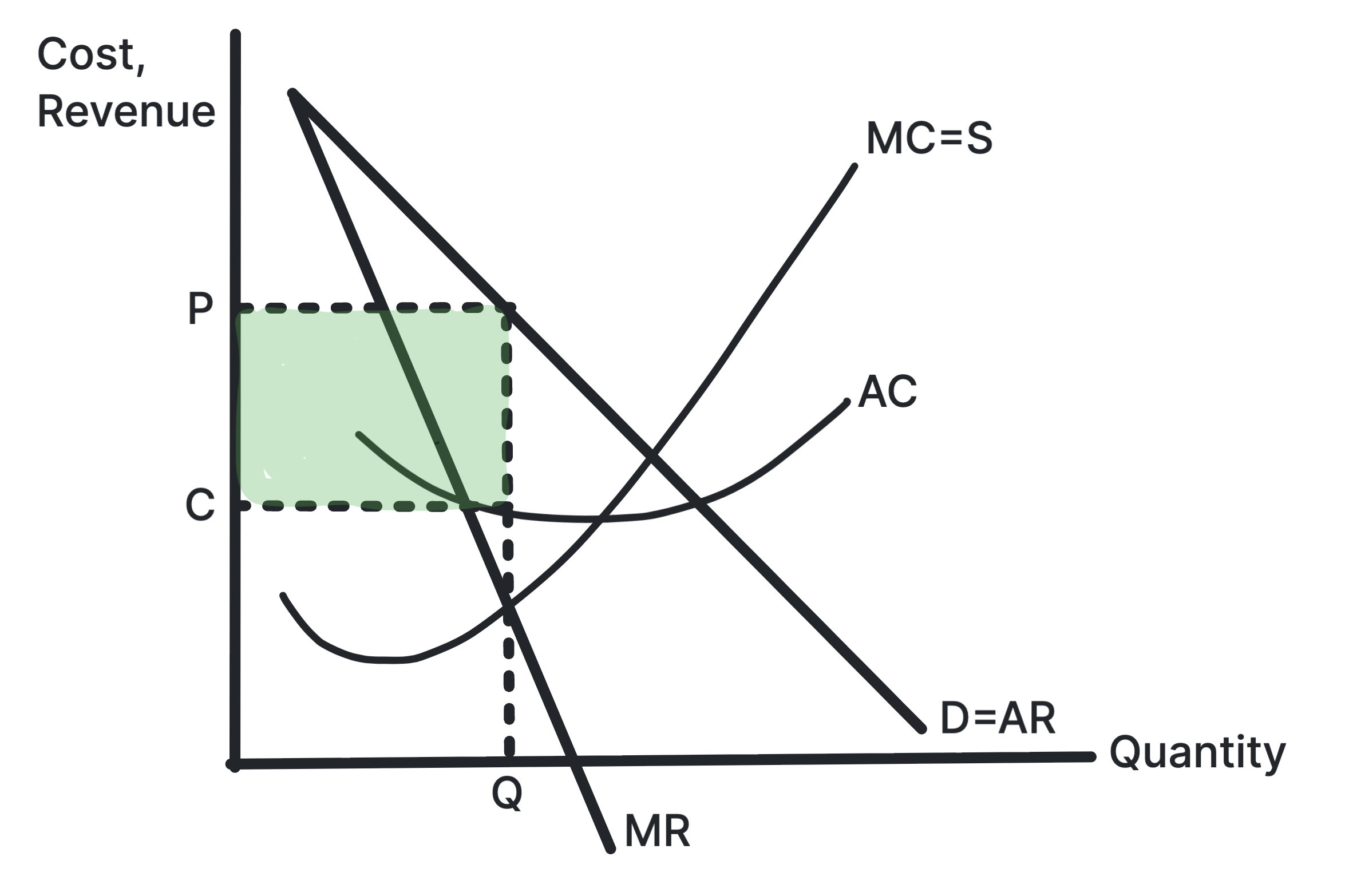
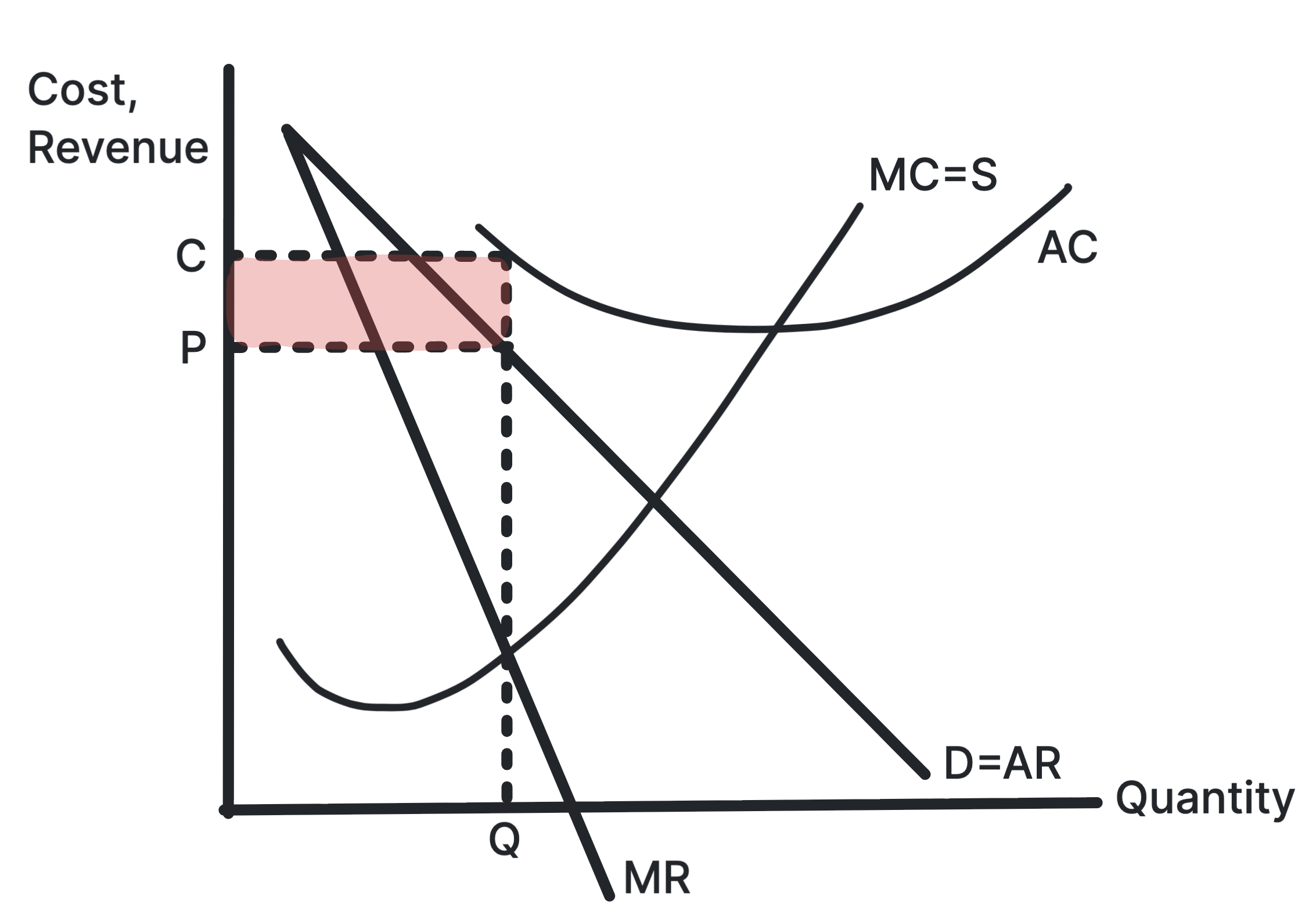
The Shut-Down Rules
Short-Run Shut-Down Rule
In the short run, fixed costs must still be paid even if output is zero, so the firm compares price (AR) with average variable cost (AVC).
- If \( AR > AVC \): Keep producing. Revenue covers all variable costs and makes a contribution towards fixed costs, so the loss is less than total fixed costs.
- If \( AR < AVC \): Shut down immediately. Revenue does not even cover variable costs, so the loss is greater than total fixed costs.
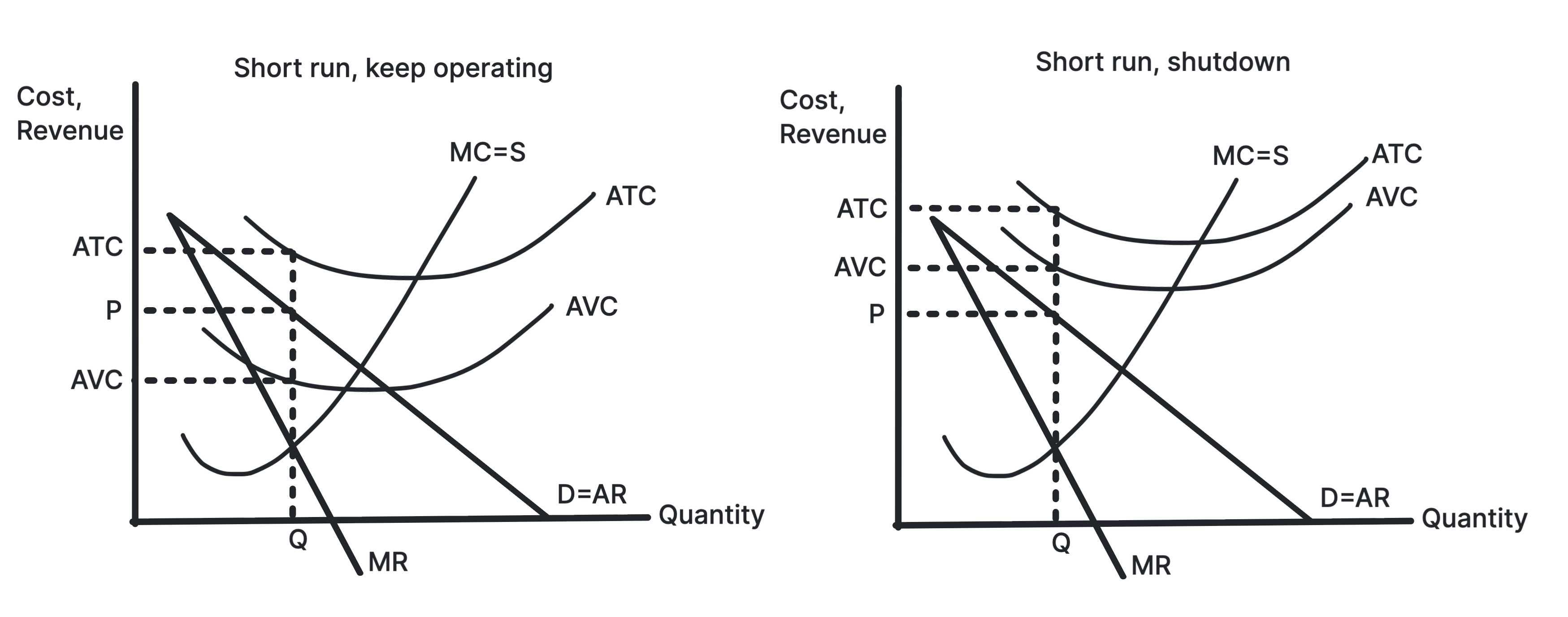
Long-Run Shut-Down Rule
In the long run, all costs are variable, so a firm can leave the industry completely.
The firm compares price (AR) with average cost (AC).
- If \( AR > AC \), the firm is making a supernormal profit and should continue producing in the long run.
- If \( AR < AC \), the firm is making a loss and should exit the industry in the long run.
Stuck on this topic? Work through it with an online A-Level Economics tutor in a free 15-minute intro call, or send an essay on it for A-Level Economics essay marking.